

What if the secret to your newborn's lifelong health isn't about achieving a "squeaky clean" finish, but rather about protecting a thriving, invisible world already living on their body? You might be surprised to learn that your baby arrives with a built-in shield made of millions of tiny, beneficial microbes. Understanding what is the microbiome of baby skin is the first step in moving past the confusion of "natural" labels and conflicting bathing advice. This living ecosystem works tirelessly to ward off pathogens and regulate pH levels, yet it remains incredibly delicate whilst your little one's immune system begins to find its feet.
It's completely understandable to feel anxious when faced with nappy rash or dry patches, but you don't need a complicated cabinet full of products to help. We promise to show you how to nurture and protect that precious barrier for your baby’s long-term comfort and resilience. This guide explores the science of this microscopic shield and provides a simple, pH-balanced routine using gentle ingredients like organic aloe vera and bamboo. By the end, you'll have the confidence to choose care that supports your baby's natural immunity and keeps their skin beautifully settled.
Key Takeaways
- Understand exactly what is the microbiome of baby skin and how this invisible community of microbes acts as a vital biological shield for your newborn.
- Discover the "seeding" process and how simple acts like skin-to-skin contact help establish a healthy microbial balance from the very first moments of life.
- Learn why choosing nappies manufactured with 80% plant-based materials ensures the breathability necessary to maintain the skin's delicate equilibrium.
- Find out how to support your baby’s natural barrier by prioritising skincare containing organic aloe vera and bamboo whilst avoiding synthetic fragrances.
- Gain the confidence to adopt a gentle, pH-balanced care routine that fosters long-term immunity and protects your little one from common irritations.
What is the Microbiome of Baby Skin and Why Does It Matter?
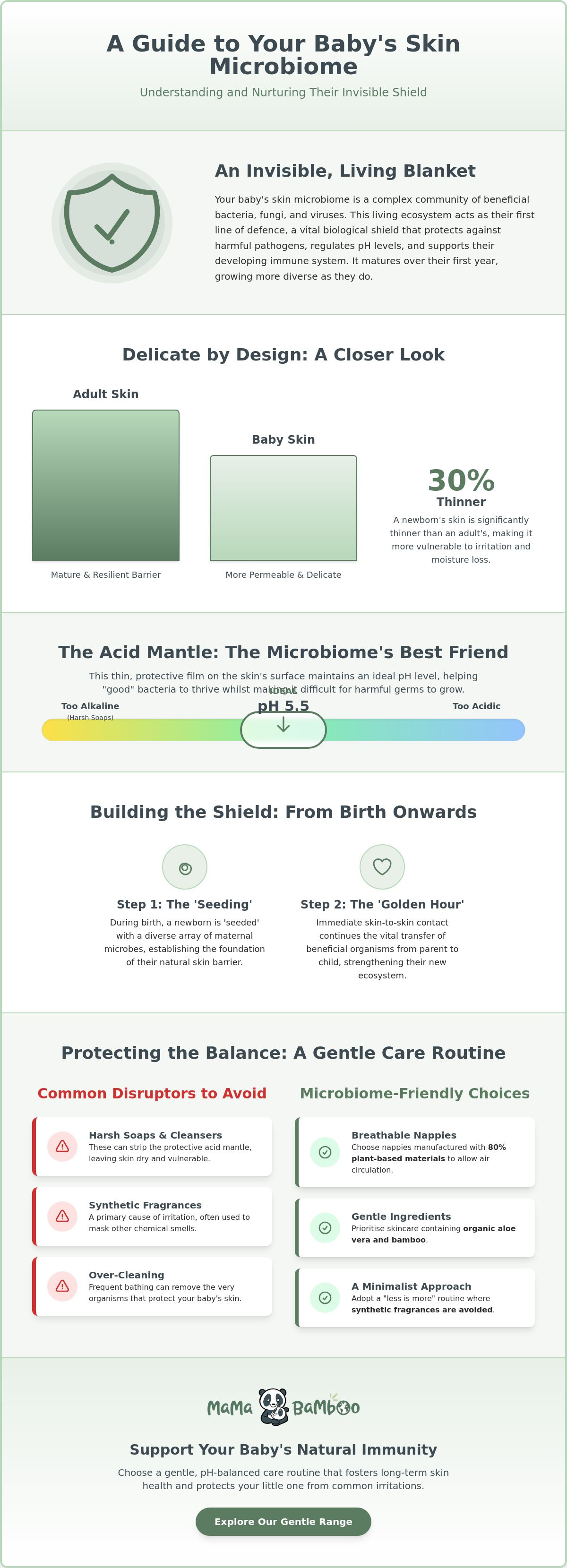
Imagine your baby is wrapped in an invisible, living blanket from the moment they arrive. This is the skin microbiome. When parents ask what is the microbiome of baby skin, they are discovering an intricate community of bacteria, fungi, and viruses that call a newborn's body home. To understand what is the skin microbiome more broadly, we look at how these microscopic residents form a vital biological shield. This community works together to defend against harmful pathogens and environmental stressors that could otherwise cause irritation. The microbiome is a living ecosystem that matures over the first year of life, slowly becoming more diverse as your baby grows.
Your little one's skin is quite different from your own. Research shows that a newborn's skin is roughly 30% thinner than an adult's, which means it's far more permeable and delicate. Because of this structural difference, their natural barrier is more vulnerable to disruption. This fragility is why understanding what is the microbiome of baby skin matters so much; it's the first line of defence during a critical stage of development. Protecting this ecosystem isn't about complexity; it's about making mindful choices that respect the skin's natural state.
The Acid Mantle: The Microbiome’s Best Friend
Working alongside these microbes is a thin, slightly acidic film on the skin's surface known as the acid mantle. This layer typically maintains a pH level around 5.5, creating the perfect environment for "good" bacteria to thrive whilst making life difficult for harmful germs. It's a clever natural balance that supports your baby's developing immunity. However, this balance is easily tipped. Using harsh soaps or cleansers with high alkalinity can strip away the acid mantle, leaving the skin dry and prone to sensitivity. By avoiding synthetic fragrances and choosing products that respect this natural acidity, you help maintain the invisible world that keeps your baby comfortable.
How the Baby Skin Microbiome Develops and Faces Disruption
The journey of your baby's skin begins well before you leave the hospital. During birth, a newborn is "seeded" with a diverse array of maternal microbes. This initial exposure, which varies depending on the birth method, is crucial for establishing the foundation of their natural barrier. Skin-to-skin contact, often called the "golden hour," continues this vital transfer of beneficial organisms from parent to child. Understanding How the Baby Skin Microbiome Develops helps us see that these early moments are about building a biological defence. When we consider what is the microbiome of baby skin, we must view it as a living legacy that starts on day one and evolves through every cuddle.
Once you're home, the environment plays a significant role in how these microbes settle. In many UK homes, factors like dry air from central heating or the mineral content in hard water can impact the diversity of these microbes. When parents ask what is the microbiome of baby skin in the context of daily care, they often find that "less is more" is the most effective approach. It’s tempting to bathe a newborn frequently, but over-cleaning is a common pitfall that can do more harm than good. Excessive scrubbing can strip away the very organisms that protect your baby. This disruption can leave the skin barrier compromised, leading to the dryness and sensitivity many parents worry about whilst trying to do their best.
Common Disruptors to Avoid
Many traditional baby products contain ingredients that are simply too aggressive for a developing system. Synthetic fragrances are a primary concern; they are often used to mask chemical smells but can act as significant irritants. We prioritise safety by ensuring synthetic fragrances are avoided in our formulations to keep your baby's skin settled. Similarly, harsh surfactants can strip natural oils, leaving the skin vulnerable to environmental stressors. Choosing gentle alternatives, such as wipes and lotions enriched with organic aloe vera and bamboo, helps maintain the skin’s delicate equilibrium. For daily changes, using breathable bamboo nappies made from 80% plant-based materials allows air to circulate, supporting a healthy microbial environment.
Protecting the Barrier: Practical Steps for Microbiome-Friendly Care
Protecting the living shield you've learned about requires a shift in perspective. Instead of focusing on deep cleaning, we aim for gentle maintenance. A "less is more" bathing routine is often the kindest choice for a newborn, as it allows the skin to self-regulate without the constant removal of protective oils. When you do need to clean, using bamboo baby wipes that are biodegradable and free from harsh chemical residues ensures you aren't leaving behind irritants that could upset the balance. These small, daily choices help maintain the stability of the skin's invisible residents.
Choosing the Right Materials for Sensitive Bums
Breathability is perhaps the most overlooked factor in infant skin health. Traditional materials can trap heat and moisture, creating a damp environment that encourages the growth of harmful bacteria. Choosing bamboo nappies provides a natural solution. Bamboo fibres are inherently breathable, helping to maintain a steady skin temperature and allowing air to circulate freely. Because these nappies are manufactured using 80% plant-based materials, they significantly reduce the risk of nappy rash by keeping the area dry and settled. This airflow is essential when considering what is the microbiome of baby skin, as a balanced ecosystem requires a stable, breathable environment to thrive.
Skincare Ingredient Transparency
When selecting lotions or washes, looking past broad marketing buzzwords is vital for long-term health. We don't describe our products as "organic" in their entirety; instead, we focus on the specific, high-quality components that make a difference. Our formulas contain organic aloe vera and bamboo to provide soothing hydration without overwhelming the skin's natural defences. We also ensure that synthetic fragrances are avoided. Whilst some products may have a gentle scent from their natural ingredients, they won't contain the hidden chemicals often found in "parfum." This level of honesty helps you understand exactly what is the microbiome of baby skin and gives you the tools to care for it with absolute confidence.
Nurturing Your Baby’s Natural Resilience
Your newborn’s skin is a remarkable, living shield that thrives when we step back and let nature do its work. By prioritising a "less is more" approach to bathing and choosing materials that allow for constant air circulation, you’re giving those beneficial microbes the best environment to flourish. Understanding what is the microbiome of baby skin empowers you to move past marketing jargon and focus on what truly supports your child's long-term health. It’s about creating a simple, gentle routine that respects the acid mantle whilst protecting that delicate, thinner skin barrier from unnecessary disruption.
As a B-Corp Certified brand, we're dedicated to meeting the highest social and environmental standards to protect the world your baby will grow up in. We’ve designed our 80% plant-based nappies using compostable materials to ensure maximum breathability, whilst our skincare features organic aloe vera and bamboo to soothe and hydrate. We ensure synthetic fragrances are avoided in every formula, keeping our ingredient lists honest and precise for your peace of mind. Explore our range of microbiome-friendly bamboo nappies and skincare to find the perfect match for your little one's needs. You’re doing a wonderful job, and with the right knowledge, you can feel confident that your baby’s skin is beautifully protected for the future.
Frequently Asked Questions
How long does it take for a baby’s skin microbiome to fully develop?
A baby's core skin microbiota is typically established by the age of three. Whilst the initial colonisation begins at birth and develops rapidly during the first few weeks, it remains a work in progress throughout the toddler years. This gradual maturation is why gentle care is so important during this early window. It allows the invisible community to stabilise without interference from harsh chemicals, letting the natural barrier strengthen at its own pace.
Can using the wrong nappies damage my baby’s skin microbiome?
Yes, nappies that lack breathability can create a damp, warm environment that disrupts the natural balance of microorganisms. When considering what is the microbiome of baby skin, we must look at how airflow affects microbial health. Choosing nappies made from 80% plant-based materials, manufactured using compostable plant-based materials wherever possible, helps maintain a steady temperature and prevents the overgrowth of harmful bacteria that often leads to nappy rash and persistent irritation.
Is it better to use "fragrance-free" or products that avoid synthetic fragrances?
We recommend choosing products where synthetic fragrances are avoided rather than those simply labelled "fragrance-free." This is because the term "fragrance-free" can be technically inaccurate if natural ingredients provide a subtle scent. By prioritising transparency, you ensure your baby isn't exposed to hidden chemical fixatives. Skincare containing organic aloe vera and bamboo provides a safe, gentle experience that respects the skin’s delicate ecosystem without unnecessary additives.
What are the signs that my baby’s skin microbiome is disrupted?
Common signs of a disrupted skin microbiome include persistent dryness, red patches, or a sudden sensitivity to products that were previously tolerated. When the biological shield is compromised, your baby may experience more frequent flare-ups of conditions like eczema or nappy rash. Recognising what is the microbiome of baby skin and how it reacts to stress allows you to simplify your routine and return to gentle, pH-balanced care until the skin feels settled again.

Disclaimer
This article was created with the assistance of artificial intelligence and has been reviewed for accuracy; however, it is intended for informational purposes only.


