

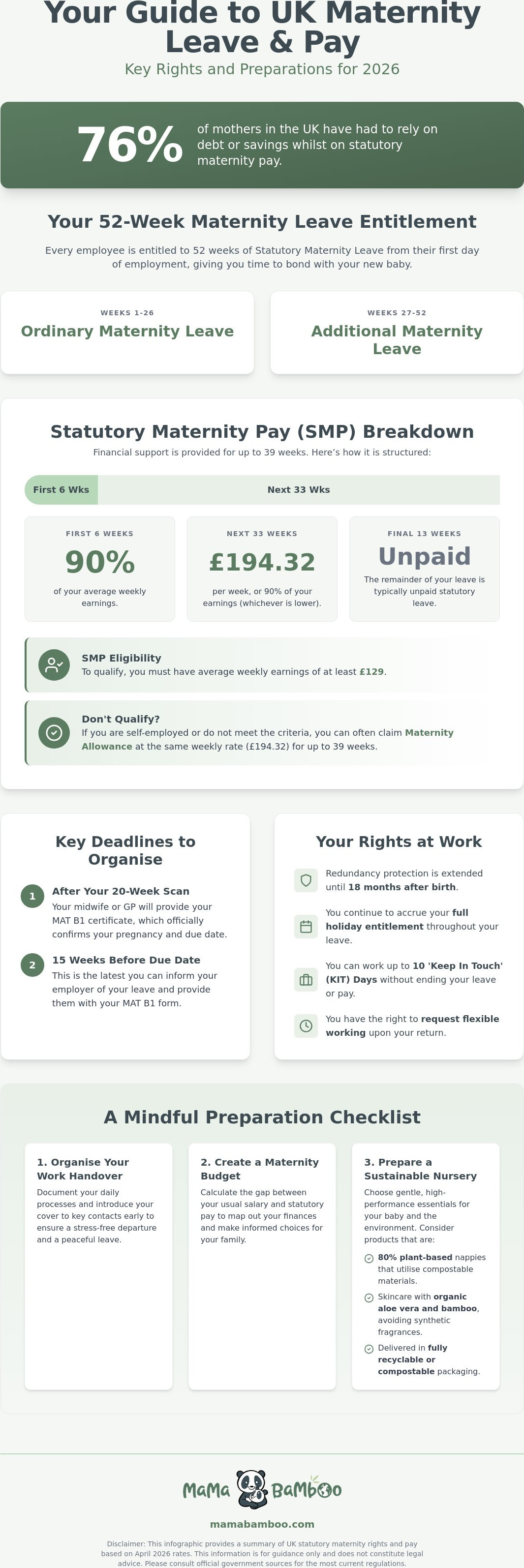
Did you know that 76% of mothers in the UK have had to rely on debt or savings just to get by whilst on statutory pay? It's a startling figure that highlights why so many expectant parents feel a sense of quiet anxiety instead of the peaceful nesting they deserve. You likely want to ensure your baby’s first months are filled with comfort and natural integrity; however, the technicalities of Maternity Leave can often feel more like a burden than a benefit when you're trying to plan for a mindful future.
We're here to act as your wise advocate, helping you navigate your legal entitlements and practical preparations with the confidence of someone who is fully informed. By understanding your rights, you can protect your career whilst prioritising your family's well-being and the health of your new arrival. This guide provides a methodical, thorough breakdown of the April 2026 statutory rates, including the £194.32 weekly payment, and offers a comprehensive checklist to help you organise your home and professional life for a truly sustainable and supportive transition.
For the purpose of this guide, we have focused on Maternity Leave as defined by the government, which applies to the 'birthing parent'. Paternity Allowance, Shared Parental Allowance, Adoption Allowance and other allowances are not covered in depth in this article. Please refer to the HMRC guidance for details of these policies.
Understanding Your Statutory Maternity Leave Rights in 2026
Every expectant mother in the UK is entitled to 52 weeks of Statutory Maternity Leave. This right exists from your first day of employment, ensuring you have the space to bond with your baby without the immediate pressure of returning to work. Whilst the full year is available to you, it's structured into two distinct parts: Ordinary Maternity Leave for the first 26 weeks and Additional Maternity Leave for the remaining 26. This framework has its roots in the evolving history of UK maternity leave, which has slowly shifted to better reflect the needs of the modern family unit.
Financial support during this time is primarily provided through Statutory Maternity Pay (SMP). To qualify, your average weekly earnings must be at least £129. The payment structure is designed to support you through the initial stages of motherhood:
-
First six weeks: You receive 90% of your average weekly earnings.
-
Next 33 weeks: You receive £194.32 per week or 90% of your earnings, whichever is lower.
These 2026 rates represent a modest increase from previous years, yet they require careful planning to ensure your household remains a sanctuary of comfort and security. Preparation brings peace.
Eligibility and Notice Periods
Securing your rights requires clear communication with your employer. You must provide notice of your intention to take Maternity Leave at least 15 weeks before your expected week of childbirth. This is also when you'll need to share your MAT B1 form, which your midwife or GP typically provides after your 20-week scan. Early planning is vital. Under the Employment Rights Act 2025, your protection against redundancy now lasts until 18 months after the birth, offering a layer of quiet reassurance during your transition. If you're self-employed or haven't been with your employer for at least 26 weeks, you may not qualify for SMP. In these instances, you can often claim Maternity Allowance, which provides the same £194.32 weekly rate for up to 39 weeks. Being organised with these dates allows you to focus on the more nurturing aspects of pregnancy, such as preparing a nursery filled with pure, gentle essentials.
Practical Steps to Organise Your Maternity Leave Transition
Organising a comprehensive handover at work is your first step toward a quiet mind. By documenting your daily processes and introducing your cover to key contacts early, you ensure a stress-free departure. This professional preparation allows you to step away with the confidence that your responsibilities are in capable hands, preventing the anxiety of unexpected work calls whilst you're trying to rest. It's about creating a clear boundary that protects your time with your newborn.
Financial clarity is equally vital for a supportive transition. Take time to calculate the gap between your usual salary and the statutory rates discussed previously to create a realistic budget for your Maternity Leave. Understanding the nuances of Statutory Maternity Pay and Leave helps you map out your household finances for the full 52 weeks. Knowing exactly how your income will change allows you to make informed choices about your nesting phase, focusing your resources on high-quality, sustainable essentials that offer long-term value and comfort.
Navigating Your Leave: Wellbeing and Employment Protection
Once you've settled into your new rhythm at home, you might start thinking about how to balance your professional identity with your new role. Keep In Touch (KIT) days are a wonderful tool for this. You can work up to 10 days during your Maternity Leave without ending your leave or losing your statutory pay. These days are optional. They offer a gentle way to stay involved with your team and maintain your professional confidence. It's also reassuring to know that you continue to accrue your full holiday entitlement whilst you're away. Many parents choose to add these accrued days to the end of their leave, extending their time at home with their baby.
Your emotional wellbeing is just as important as your practical organisation. Finding a supportive community of other parents can provide a sense of warmth and shared experience during the more challenging days. Whether it's through local groups or digital spaces, connecting with those who understand the joys and pressures of nesting can alleviate the quiet anxieties of modern parenting. As you look toward the future, remember that you have the right to request flexible working. Discussing these arrangements early ensures that your return to the office feels like a natural extension of your family's new lifestyle. Clarity brings confidence.
Your Rights to Protection and Return
The legal landscape has recently shifted to offer you even greater security. Under the latest updates to Statutory Maternity Pay and Leave regulations, your protection against redundancy has been significantly extended. This protection now begins the moment you inform your employer of your pregnancy and lasts until 18 months after the birth. It's a powerful safeguard. It's designed to give you peace of mind whilst you focus on your baby's development and the health of your next generation. This protection ensures that your transition back into the workplace is handled with the respect and fairness you deserve.
You also have the right to return to the exact same job you held before your leave began, provided you return within the first 26 weeks. If you take the full 52 weeks, you are still entitled to return to the same role or, if that's not possible, a suitable alternative with similar terms and conditions. These rights exist to protect your career and ensure a supportive environment for your return. By understanding these protections, you can focus on the sensory, comfort-oriented experience of your baby's first year, knowing your professional future is secure.
Embrace Your New Chapter with Confidence
Transitioning into parenthood is a profound journey that deserves both legal clarity and practical ease. By understanding your entitlements to Maternity Leave and the updated 2026 statutory rates, you've taken the first step toward a secure and focused year with your baby. Remember that your rights, including the 18-month redundancy protection, are there to provide a safety net whilst you prioritise your family's wellbeing and the nurturing of a new life. This knowledge allows you to step away from your career with a quiet mind, knowing your professional future is protected.
Frequently Asked Questions
Can I change my maternity leave return date after I have started leave?
You can change your return date by providing your employer with at least eight weeks' notice before the new date or the original date, whichever comes first. This flexibility allows you to adjust your plans based on your baby's needs and your own wellbeing. It's a supportive right that ensures you don't feel pressured if your circumstances change during your time away from the office.
What happens to my pension contributions whilst I am on maternity leave?
Your employer must continue to pay their pension contributions whilst you are receiving pay during your Maternity Leave. These contributions are typically based on your normal salary before you started your leave, rather than your reduced statutory pay. Your own contributions will be calculated based on the actual amount of pay you receive during this period. This protection ensures your long-term financial health remains a priority whilst you focus on your family.
Is it possible to share my maternity leave with my partner through Shared Parental Leave?
You can share your leave by opting into Shared Parental Leave (SPL), which allows you to end your maternity entitlement early so the remaining weeks can be used by your partner. Whilst the government found that only 1% of eligible mothers used this option in 2023, it remains a valuable choice for families seeking a more equal share of childcare. This arrangement can help foster a sense of warmth and shared responsibility within your home during those vital first months.
What should I do if my employer refuses to grant me maternity leave?
If your employer refuses your request, you should remind them that Statutory Maternity Leave is a "day one" right for all employees regardless of how long you have worked there. If an internal discussion does not resolve the matter, you can seek expert guidance from ACAS or your local Citizens Advice bureau. You are legally protected against unfair treatment or dismissal due to pregnancy, ensuring your journey into motherhood is respected and secure.

Disclaimer
This article was created with the assistance of artificial intelligence and has been reviewed for accuracy; however, it is intended for informational purposes only.


