

Did you know that a single child using conventional disposable nappies can generate nearly 900 kilograms of waste before they are even potty trained? It is a staggering figure that often leaves parents feeling a deep sense of guilt whilst they manage the already demanding early years. You want to protect your child's future, yet the "greenwashing" and vague claims found on many supermarket shelves make it difficult to know which choices truly matter. We understand that you need products that perform just as well as the market leaders, without the heavy environmental toll.
Learning how to reduce plastic waste with a baby shouldn't mean compromising on the softness or reliability your family deserves. This guide offers a clear, honest plan for making high-impact swaps that fit your daily routine.
The Nappy Change Revolution: High-Impact Swaps for Daily Waste
Every year, millions of disposable nappies end up in UK landfills, contributing significantly to the crisis of global plastic pollution. If you are wondering how to reduce plastic waste with a baby, the changing table is the most powerful place to start. Conventional disposables often contain significant amounts of plastic that can take centuries to break down. Making a conscious switch doesn't mean you have to sacrifice the ease of a disposable system.
Choosing Better Materials for Nappy Changes
High-quality bamboo nappies offer a sophisticated solution for the modern parent. These nappies are 80% plant-based and manufactured using compostable plant-based materials wherever possible. Beyond the environmental benefits, bamboo is naturally breathable. This quality helps to protect babies with sensitive skin from irritation and nappy rash. To ensure a truly circular approach, look for products that arrive in fully recyclable or compostable packaging. This prevents your daily routine from adding to the ever-growing burden of landfill waste. High performance is also non-negotiable. These materials are designed to be exceptionally absorbent, providing the security you need to prevent "poonamis" whilst remaining gentle on the earth.
The Truth About Wipes and Fatbergs
Standard baby wipes are frequently made from polyester-based fibres that do not disappear when discarded. Even those marketed as "flushable" can contain hidden plastics, contributing to the formation of fatbergs in our sewers. Transitioning to 100% biodegradable bamboo baby wipes ensures that your cleaning routine is as kind to the planet as it is to your baby's skin. These wipes break down naturally but remain strong enough to handle even the messiest changes. For a deeper dive into the science of sustainable materials, you can explore the Ultimate Guide to Bamboo Nappies. It is a simple swap that significantly lowers your family’s plastic footprint from day one.
Building a Sustainable Nursery: Play, Gifting, and Second-Hand Secrets
Creating a space for your little one is an emotional journey, but it's easy to fall into the "newness trap". Many parents feel pressured to buy every piece of furniture and clothing brand new. However, choosing pre-loved items is a powerful way to reduce and reuse within your home. Second-hand wooden furniture has often already finished "off-gassing" any volatile organic compounds, making it a safer choice for your baby's sleep environment. By organising hand-me-downs amongst your local community, you extend the life of high-quality garments and keep them out of landfill.
Curating a Minimalist and Eco-Friendly Nursery
When you need to buy new, focus on quality over quantity. This mindset is essential when learning how to reduce plastic waste with a baby. Look for B-Corp certified brands that demonstrate a genuine commitment to social and environmental impact. If you're sourcing pre-loved cots or car seats, always check they meet the latest UK safety standards. A minimalist nursery isn't just about aesthetics; it's about reducing the total volume of plastic entering your household. Selecting toys made from natural materials, such as FSC-certified wood or natural rubber, ensures your child's play area is free from short-lived plastic gadgets.
Managing Gifting and Family Expectations
Gifting often becomes a source of unintended waste. Well-meaning relatives may arrive with plastic toys that quickly lose their appeal. You can gently guide them by sharing a sustainable registry or politely requesting experiences over physical objects. Practical gifts, such as a bamboo nappy subscription, provide immense value to your daily routine without adding to the toy box clutter. These subscriptions ensure you always have high-performance, plant-based essentials on hand, helping you maintain your commitment to the planet whilst managing the busy reality of parenthood.
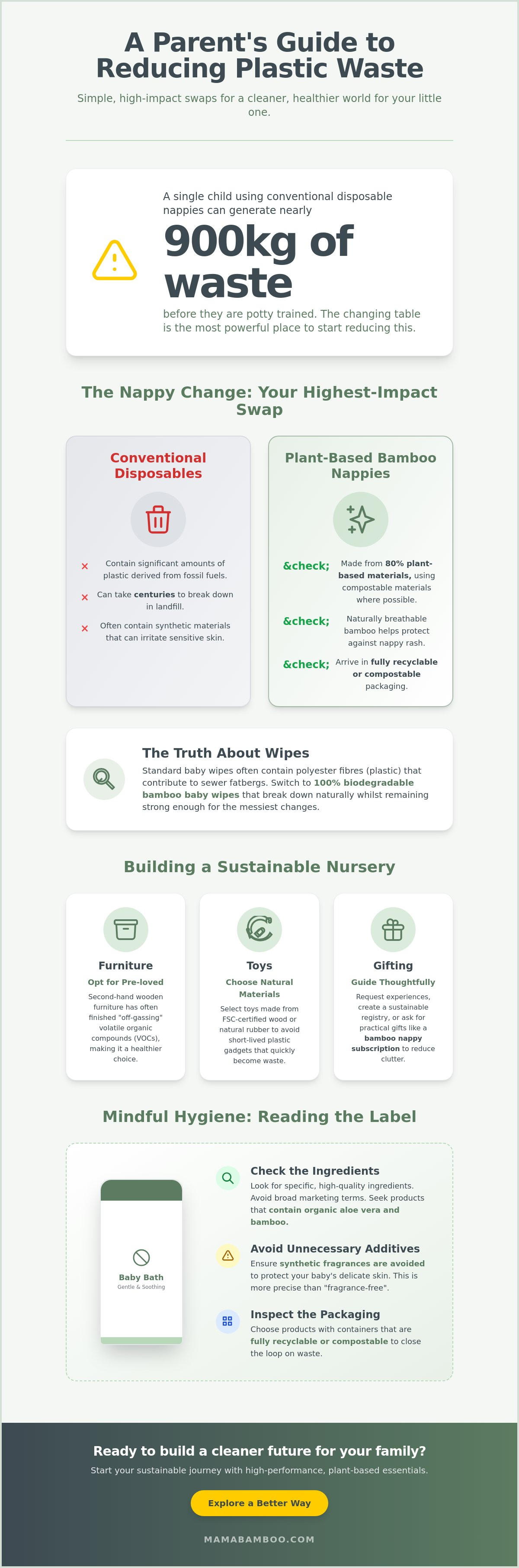
Mindful Hygiene: Eco-Conscious Bathing and Skincare Routines
The bathroom cabinet is often an overlooked source of waste. From bulky bottles to hidden microplastics, your baby's bathing routine can leave a heavy footprint. When you want to find ways to reduce plastic pollution, evaluating these daily essentials is vital. Many conventional lotions and shampoos rely on complex, non-recyclable packaging and ingredients that aren't as pure as they seem.
Selecting Gentle and Transparent Skincare
Transparency is key to understanding how to reduce plastic waste with a baby whilst protecting their delicate skin. Instead of relying on broad marketing terms like "organic", we believe in highlighting specific, high-quality ingredients. Effective personal care items should contain organic aloe vera and bamboo to soothe and nourish. It's also essential to ensure that synthetic fragrances are avoided. Whilst products may still carry a subtle natural scent from their ingredients, avoiding lab-created perfumes protects the skin's natural barrier. Look for shampoos and lotions housed in fully recyclable or compostable packaging to keep your bathroom routine aligned with your values.
The Sustainability of Subscriptions
Organising your supplies through a subscription model does more than just reduce your mental load. It prevents the need for emergency, plastic-heavy supermarket runs that often lead to impulsive, less sustainable choices. Consolidated shipping for your nappy and wipe deliveries significantly lowers the carbon footprint of your household. By choosing a "set and forget" approach, you ensure a steady flow of essentials without the environmental cost of multiple individual shopping trips. This model is a practical answer for parents wondering how to reduce plastic waste with a baby without adding to their daily stress. It’s a simple, methodical way to maintain a mindful lifestyle while focusing on your child's well-being.
Creating a Lasting Legacy for the Next Generation
Every mindful change you introduce to your daily routine creates a meaningful ripple effect for the environment. By choosing nappies crafted from 80% plant-based and compostable materials, and selecting skincare enriched with organic aloe vera and bamboo, you are protecting both your child's delicate skin and their future world. You now have a clear, honest plan for how to reduce plastic waste with a baby by focusing on technical accuracy and high-performance swaps rather than settling for vague marketing buzzwords.
We are here to walk alongside you, offering solutions that are as gentle as they are effective. As a B-Corp Certified company, we maintain the highest social and environmental standards; we ensure our products are dermatologically tested for sensitive skin and arrive via carbon-neutral delivery across the UK. Embracing a sustainable lifestyle is a journey of small, intentional steps that lead to a healthier planet, providing peace of mind whilst you focus on the joy of parenthood. Discover Mama Bamboo’s range of sustainable nappies and wipes today and start building a cleaner, kinder home for your little one to explore.
Frequently Asked Questions
Is it possible to have a completely plastic-free baby?
Achieving a completely plastic-free lifestyle with a newborn is exceptionally challenging due to safety regulations and manufacturing standards for essential gear. However, learning how to reduce plastic waste with a baby is about progress rather than perfection. By prioritising items made from natural materials and choosing technically accurate products, you can significantly lower your family's environmental footprint whilst maintaining the safety and comfort your baby requires.
Are bamboo nappies actually better for the environment than plastic ones?
Bamboo nappies represent a significant improvement over traditional options because they are 80% plant-based and manufactured using compostable plant-based materials wherever possible. This drastically reduces the amount of petroleum-derived plastic entering your home. When these nappies are paired with fully recyclable or compostable packaging, they provide a responsible solution that balances high performance with environmental care, ensuring that your daily choices support a healthier future for your child.
How can I reduce waste if I can't or don’t want to use reusable cloth nappies?
You can effectively reduce plastic waste with a baby without using cloth nappies by opting for high-performance bamboo alternatives. These disposables offer the same convenience as market leaders but use far fewer synthetic materials. Complementing this with 100% biodegradable bamboo baby wipes and sourcing pre-loved nursery furniture allows you to significantly decrease household waste. These practical swaps ensure your parenting journey remains manageable whilst remaining deeply rooted in environmental responsibility.
What should I look for in eco-friendly baby skincare ingredients?
Look for specific ingredient disclosures rather than broad "organic" or "natural" claims. Effective and gentle personal care items, such as shampoos and lotions, should contain organic aloe vera and bamboo to nurture delicate skin. It is also important to ensure that synthetic fragrances are avoided to prevent irritation. Choosing products packaged in fully recyclable or compostable packaging ensures your hygiene routine remains honest, transparent, and technically accurate for the environment. Mama Bamboo skincare and bodycare is all packaged in return and reuse aluminium bottles

Disclaimer
This article was created with the assistance of artificial intelligence and has been reviewed for accuracy; however, it is intended for informational purposes only.


