

Last night, you probably reached for the usual barrier cream, only to find your little one’s skin still flared and angry by morning. More than half of all infants are affected by skin irritation by their first birthday, yet it’s deeply distressing when your trusted remedies suddenly seem to fail. If the redness is spreading into skin folds or showing tiny, raised satellite spots, you might be dealing with nappy rash thrush rather than standard chafing.
We understand the anxiety of seeing your baby in discomfort and the desire to avoid harsh chemicals on their sensitive skin. You deserve a solution that is both protective and restorative. This guide will help you distinguish fungal infections from regular irritation and provide a clear, gentle treatment plan. You’ll learn how to manage the current flare-up whilst discovering how breathable, 80% plant-based materials and soothing ingredients like organic aloe vera and bamboo can help maintain your baby’s skin health naturally.
Key Takeaways
- Learn to spot the signature "satellite lesions" and deep redness in skin folds that help you identify nappy rash thrush versus standard irritation.
- Discover the correct way to apply antifungal treatments to ensure your baby’s skin heals quickly and comfortably.
- Reduce the "greenhouse effect" in the nappy area by choosing breathable, 80% plant-based materials that naturally regulate temperature and airflow.
- Understand why avoiding synthetic fragrances and using soothing ingredients like organic aloe vera and bamboo can protect your little one’s delicate skin barrier.
- Establish a gentle, sustainable daily routine to prevent recurrence and keep your baby’s skin beautifully soft and healthy.
Identifying Nappy Rash Thrush: Symptoms and Key Signs
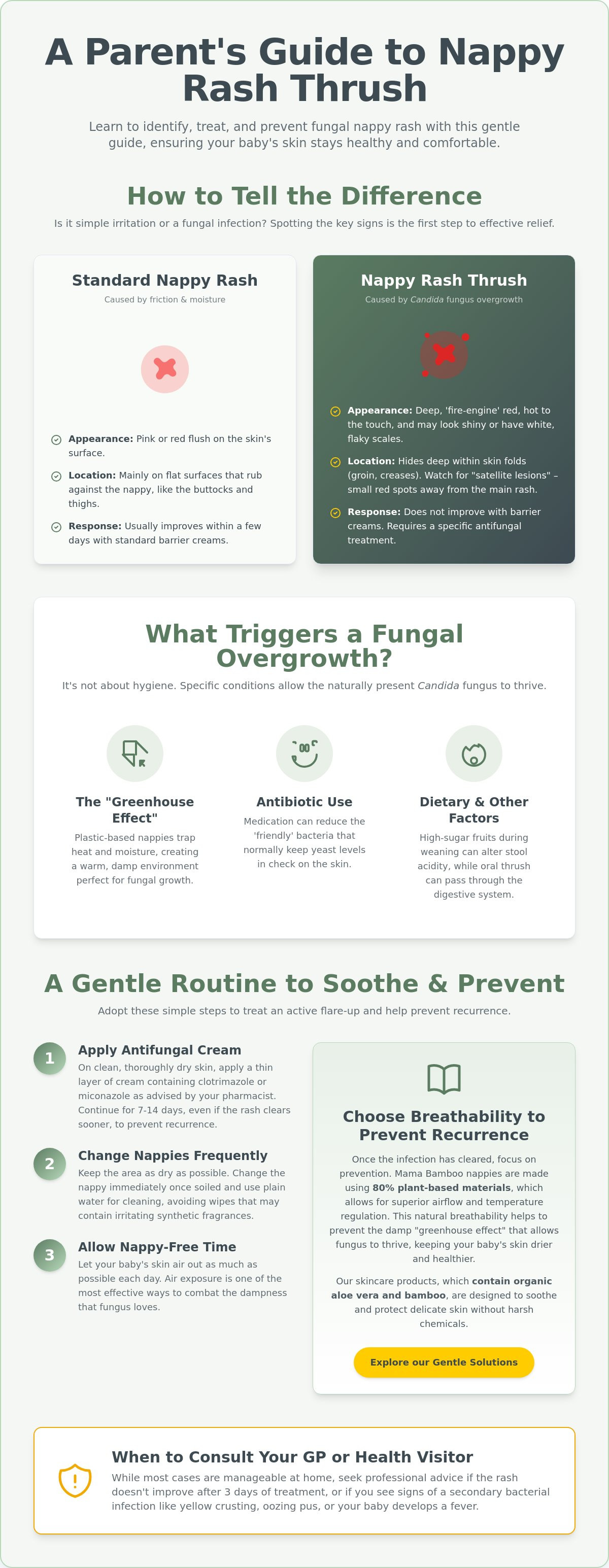
Every parent knows the sinking feeling of seeing a sore bottom during a nappy change. Whilst most irritation is caused by Irritant diaper dermatitis, a persistent flare-up might actually be nappy rash thrush. This specific type of infection is caused by an overgrowth of Candida albicans, a yeast-like fungus that thrives in the warm, damp environment of a nappy. Unlike a standard rash, which usually looks like a pink or red flush on the skin's surface, thrush presents as a deep, fire-engine red that feels hot to the touch.
One of the most distinctive signs of a fungal infection is the presence of "satellite lesions". These are tiny, raised red spots or pustules that appear away from the main area of redness, almost like little islands on the surrounding healthy skin. If you've been using breathable nappies and applying standard zinc-based barrier creams for several days without seeing any improvement, it's a strong indicator that the issue is fungal rather than a simple case of chafing.
Nappy Rash vs Thrush: How to Tell the Difference
Standard nappy rash usually affects the flat areas of skin that rub against the nappy, such as the buttocks or thighs. In contrast, nappy rash thrush tends to hide deep within the skin folds and creases of the groin. You might notice the skin looks unusually shiny or even develops white, flaky scales. Because fungal infections can be intensely itchy and irritating, your baby may seem more distressed, restless, or uncomfortable during changes than they would with a typical red bottom.
When to Consult Your Health Visitor or GP
Whilst many mild cases can be managed at home with the right care, you should seek professional advice if the rash doesn't improve after three days of treatment. Contact your GP or health visitor immediately if you notice signs of a secondary bacterial infection, such as yellow crusting, oozing pus, or if your little one develops a fever. A professional diagnosis is vital before you start any medicated antifungal treatment to ensure you're using the most effective approach for your baby’s specific needs.
Why Fungal Infections Occur: Understanding the Candida Overgrowth
Candida albicans is a quiet resident on your baby’s skin. Under normal conditions, this yeast-like fungus is harmless, kept in check by a healthy balance of bacteria. However, when the delicate ecosystem of the nappy area is disturbed, Candida seizes the opportunity to multiply rapidly. This shift from a peaceful presence to an overgrowth is what leads to nappy rash thrush. It isn't a sign of poor hygiene; it's simply a biological response to a change in the skin's environment.
One of the primary catalysts for this overgrowth is the "greenhouse effect". Many standard nappies use plastic-based outer layers that effectively seal in heat and moisture. This creates a humid, stagnant microclimate that acts as a perfect incubator for fungus. Antibiotics also play a significant role. If your baby has recently taken a course, or if you are breastfeeding and taking them yourself, these medicines can inadvertently wipe out the "friendly" bacteria that naturally regulate yeast levels. When these defences are lowered, the skin’s pH balance shifts, becoming more alkaline and vulnerable to irritation. Understanding these nappy rash causes and treatment strategies is the first step in restoring your baby’s comfort.
The Dampness Trap: How Nappy Choice Affects Fungal Growth
Standard disposable nappies often rely on plastic covers and plastic linings. These materials trap moisture against the skin, causing it to soften and break down. This process, known as maceration, makes it much easier for fungus to penetrate the skin’s surface. True breathability is a biological necessity. Choosing 80% plant-based materials, such as those found in Bamboo Nappies, allows for superior airflow and thermoregulation, keeping the skin dry and resilient.
Dietary and Lifestyle Triggers
Dietary changes during weaning can also spark a flare-up. Introducing high-sugar fruits can alter the acidity of your baby's stool, which may irritate the skin and encourage fungal growth.
Sometimes, the infection starts elsewhere. If your little one has oral thrush, the yeast can travel through the entire digestive tract and reappear in the nappy. Because a baby's immune system is still developing, they are naturally more susceptible to these persistent cycles of infection.
Effective Treatment Strategies for Fungal Nappy Rash
Treating nappy rash thrush requires a shift from standard barrier methods to targeted antifungal care. Unlike a typical rash that needs protection from moisture, a fungal infection needs a medical agent to stop the yeast from multiplying. Pharmacists usually recommend antifungal creams containing clotrimazole or miconazole as the primary fix for nappy rash thrush. It’s essential to apply these treatments to clean, dry skin before adding any other layers. To prevent the infection from returning, you must continue the application for a minimum of 7 to 14 days, even if the skin looks perfectly clear after the first few days. Thrush in babies can be persistent, so following the full course is the best way to protect your little one’s comfort.
Medical Treatments and Pharmacy Advice
When applying antifungal ointments, always wash your hands before and after to avoid cross-contamination. You might be tempted to use a steroid cream to reduce redness, but you should avoid these unless specifically prescribed by your GP; they can sometimes make a fungal infection worse. Whilst barrier creams like zinc oxide are staples for standard care, some medical guidelines advise stopping them whilst using clotrimazole to ensure the antifungal can reach the skin directly. If a protective secondary layer is needed, a thin application of liquid paraffin can provide a gentle shield without trapping the fungus.
Natural Supportive Care at Home
Supporting your baby’s recovery involves more than just medicine. Switch from wipes containing synthetic fragrances to more natural ingredients like organic aloe Vera and coconut. This reduces the risk of further stinging on raw skin. Always pat the area dry with a soft towel rather than rubbing, which can damage the already fragile skin barrier. Organising 15-minute "air baths" several times a day is perhaps the most effective natural co-treatment. Breaking the moisture cycle by letting the skin breathe naturally helps the antifungal treatment work its magic more quickly.
The Role of Breathability: Why Material Choice Matters for Healing
Once you have begun the necessary medical treatment for nappy rash thrush, the focus should shift to transforming the environment within the nappy. Fungus thrives in stagnant, humid conditions, which is why the breathability of your baby's nappy is a biological necessity rather than a luxury. Standard disposable options often use plastic-based outer layers that trap heat and moisture against the skin; this effectively creates a "greenhouse" for yeast to multiply. In contrast, 80% plant-based nappies constructed using compostable plant-based materials allow for a much higher rate of air exchange. This constant flow of fresh air helps to dry the skin naturally and break the cycle of infection.
Why Bamboo is Naturally Hostile to Fungus
Bamboo fibres possess a unique, micro-porous structure that facilitates natural thermoregulation, keeping the nappy area at a consistent, comfortable temperature. This material is remarkably efficient at moisture management, as bamboo is known to absorb up to 40% more moisture than cotton. By wicking wetness away from the skin surface almost instantly, it removes the dampness that Candida needs to survive. This superior absorption also helps reduce the "heat-rash" component that frequently precedes a fungal flare-up, keeping the skin cool and resilient even during long periods of sleep.
Avoiding Irritants in Baby Wipes
When skin is raw from a fungal infection like nappy rash thrush, even the smallest amount of synthetic fragrance or alcohol can cause significant distress. Many standard wipes contain these hidden irritants, which disrupt the skin's pH and delay the natural healing rhythm. Opting for Bamboo Baby Wipes provides a gentler alternative that respects the skin’s delicate barrier whilst providing effective cleansing. Once the redness has subsided, you can support the recovery of the skin's lipid barrier by applying a baby lotion that contains organic aloe vera and bamboo. This helps to lock in moisture and provides a soothing, protective layer against future irritation.
Nurturing Sensitive Skin: A Sustainable Approach to Nappy Care
Mama Bamboo acts as a supportive partner for parents navigating the challenges of nappy rash thrush. We understand that your baby’s skin is their first line of defence, which is why our B-Corp commitment to purity is at the heart of everything we do. We strictly avoid the use of chlorine, parabens, and synthetic fragrances, as these common irritants can disrupt the skin’s natural pH and invite infection. By choosing materials that prioritise skin integrity, you create a protective sanctuary for your little one’s most delicate areas. The soft-touch luxury of bamboo fibres is particularly important for babies with inflamed skin; it provides a silky surface that prevents the painful friction often caused by standard wood-pulp nappies.
The Mama Bamboo Difference for Rash-Prone Babies
Our carbon-neutral nappies are designed to protect your baby whilst respecting the environment. We use 80% plant-based materials and construct our products using compostable plant-based materials wherever possible to ensure maximum breathability. Many parents amongst our community have shared how switching to our breathable range helped resolve chronic nappy rash thrush that standard brands couldn't fix. To support the skin’s recovery, our organic baby lotion, which contains organic aloe vera and bamboo, offers a gentle way to soothe the groin and thighs without the need for heavy, greasy additives.
Switching to a Healthier Routine
Establishing a "purity-first" nappy change routine is one of the most effective ways to maintain long-term skin health. This involves gentle cleansing, thorough drying, and the use of high-quality, breathable materials. Organising a nappy subscription is a practical way to ensure you always have the right tools on hand. It removes the risk of running out and having to resort to inferior, plastic-heavy brands that can trigger a recurrence. Our packaging is fully recyclable or compostable, so you can feel confident that your choices are as kind to the planet as they are to your baby’s skin.
Protect your baby’s delicate skin with our bamboo nappy range
Restoring Your Baby’s Natural Comfort
Managing a persistent flare-up of nappy rash thrush can feel overwhelming, but understanding the biological triggers gives you the power to restore your baby’s skin health. By moving beyond standard barrier creams and focusing on true breathability, you remove the damp conditions that Candida thrives in. It’s about creating a dry, calm environment where delicate skin can finally begin to heal.
Choosing high-quality, 80% plant-based nappies ensures that air circulates freely, keeping the skin cool and resilient. As a B-Corp certified leader voted "Best Eco Nappy" by Mother & Baby, we're dedicated to providing the purity your little one deserves. Our nappies are constructed using compostable plant-based materials and breathable bamboo fibres; this ensures no synthetic fragrances or harsh chemicals touch their sensitive skin. You don't have to navigate these parenting challenges alone. With a few mindful shifts in your routine, you can protect your baby’s comfort and the planet’s future simultaneously.
Discover the breathability of Mama Bamboo nappies today
Frequently Asked Questions
How can I tell if my baby has thrush or just nappy rash?
You can identify nappy rash thrush by its appearance in the deep skin folds and the presence of tiny red "satellite" spots. Standard nappy rash usually stays on the flatter surfaces that touch the nappy, whereas thrush thrives in the warm, hidden creases. The colour is often a much more intense, vivid red than a typical heat-related flush, and the skin may look shiny or flaky.
Can I use standard nappy rash cream on thrush?
Standard barrier creams aren't effective against a fungal infection because they lack the necessary antifungal agents. In fact, applying a thick layer of zinc-based cream can sometimes trap the yeast against the skin, potentially making the situation worse. You need a medicated cream from a pharmacist or GP to clear the overgrowth before returning to your usual protective routine.
How long does it take for nappy rash thrush to go away?
Most babies show signs of improvement within three days of starting antifungal treatment, but the infection can linger beneath the surface. It’s vital to continue applying the cream for the full 7 to 14 days as directed by your health professional. Stopping too early is a common cause of recurrence, as it allows any remaining yeast to multiply again once the medication stops.
Is nappy rash thrush contagious to other children?
Thrush is technically contagious and can be passed between children through shared changing mats, towels, or unwashed hands. It’s important to sanitise your changing area thoroughly after every use and wash your hands with warm, soapy water. If you have other children in nappies, keep their changing supplies separate until the infection has completely cleared to prevent the yeast from spreading.
Should I stop using baby wipes if my baby has thrush?
You don't need to stop using wipes entirely, but you should avoid any that contain synthetic fragrances or alcohol. These ingredients can cause significant stinging on skin already sensitised by nappy rash thrush. Using bamboo baby wipes provides a much gentler experience whilst the skin’s natural lipid barrier is in its recovery phase.
Can breastfeeding cause nappy rash thrush in babies?
Breastfeeding itself doesn't cause the infection, but it can be part of a cycle if the mother has nipple thrush. The yeast can pass back and forth between the baby’s mouth and the mother’s breast, eventually reaching the nappy area via the digestive tract. If you suspect this is happening, both you and your baby may need treatment simultaneously to break the cycle of reinfection.
What are the best nappy for babies who get frequent thrush?
The most effective nappies for babies prone to fungal infections are those that prioritise maximum airflow and moisture-wicking. Nappies made from 80% plant-based materials, specifically bamboo, allow the skin to breathe much more effectively than standard plastic-lined disposables. These are constructed using compostable plant-based materials wherever possible to maintain a dry environment that is naturally hostile to yeast overgrowth.
Can I use talcum powder to keep the area dry during an infection?
Talcum powder should be avoided as it can be inhaled by your baby and may clump together when mixed with moisture, creating a gritty texture that irritates raw skin. It doesn't address the underlying fungal cause and can actually provide a surface for bacteria to grow. The safest way to keep the area dry is through frequent nappy-free "air baths" and gently patting the skin with a soft, clean towel.


