

Have you ever noticed deep red marks around your baby’s thighs even though the packet says they’re well within the weight range? It's a common frustration that often leads to the dreaded midnight pyjama change and unnecessary worry about skin irritation. You want your little one to feel cherished and protected, yet the transition between sizes can feel like a constant guessing game. It's perfectly natural to feel confused when a size 3 fits during the day but fails you at night, or when you aren't sure if it's time to move to a 3+ for that extra absorbency.
This comprehensive nappy size guide uk will help you look beyond the numbers to find a fit that ensures leak-free nights and healthy, breathable comfort. You'll discover how to choose the right nappy size by weight and physical milestones to ensure your baby stays dry and happy. We'll explore the specific signs that it's time to size up, the benefits of using 80% plant-based materials, and how to achieve a soft, secure fit for even the most sensitive skin. By understanding the subtle balance between weight and shape, you can move forward with confidence and peace of mind.
Key Takeaways
- Learn why standard UK nappy sizes are determined by your baby's weight in kilograms rather than their age to ensure a more precise and protective fit.
- Master simple techniques like the "Two-Finger Rule" and leg cuff checks to prevent side leaks whilst keeping your baby’s skin soft and rash-free.
- Identify the clear physical signs that it is time to transition sizes using this nappy size guide uk to avoid common "poonamis" and nighttime leaks.
- Understand the comfort benefits of choosing nappies that are 80% plant-based and made using compostable plant-based materials wherever possible.
- Discover how to choose between standard nappies and nappy pants as your little one reaches new milestones like crawling and walking.
Understanding the UK Nappy Size Chart by Weight
Selecting the right nappy is about more than just checking a number on a packet. It's a balance of comfort and protection. Unlike baby clothing, which often uses age as a metric, the standard nappy size guide uk parents rely on is based entirely on weight. This is because babies grow at vastly different rates; two infants of the same age can have very different builds. Understanding this weight-centric approach is the first step toward preventing the leaks that disrupt your family's sleep. As noted in Wikipedia's guide to diapers, sizing is critical for both comfort and hygiene.
You might notice that weight ranges often overlap. For example, a Size 2 might cover 4-8kg, whilst a Size 3 covers 6-10kg. If your baby weighs 7kg, they technically fit both. In these instances, the choice often comes down to your baby's unique shape. A taller, leaner baby might stay in the smaller size longer, while a baby with "chunky" thighs may benefit from the extra room of the larger size. Choosing nappies made using compostable plant-based materials wherever possible ensures that even if the fit is snug, the fabric remains breathable. Our nappies are 80% plant-based, which helps maintain natural airflow against your baby's skin.
UK Nappy Size Chart: Weight Ranges
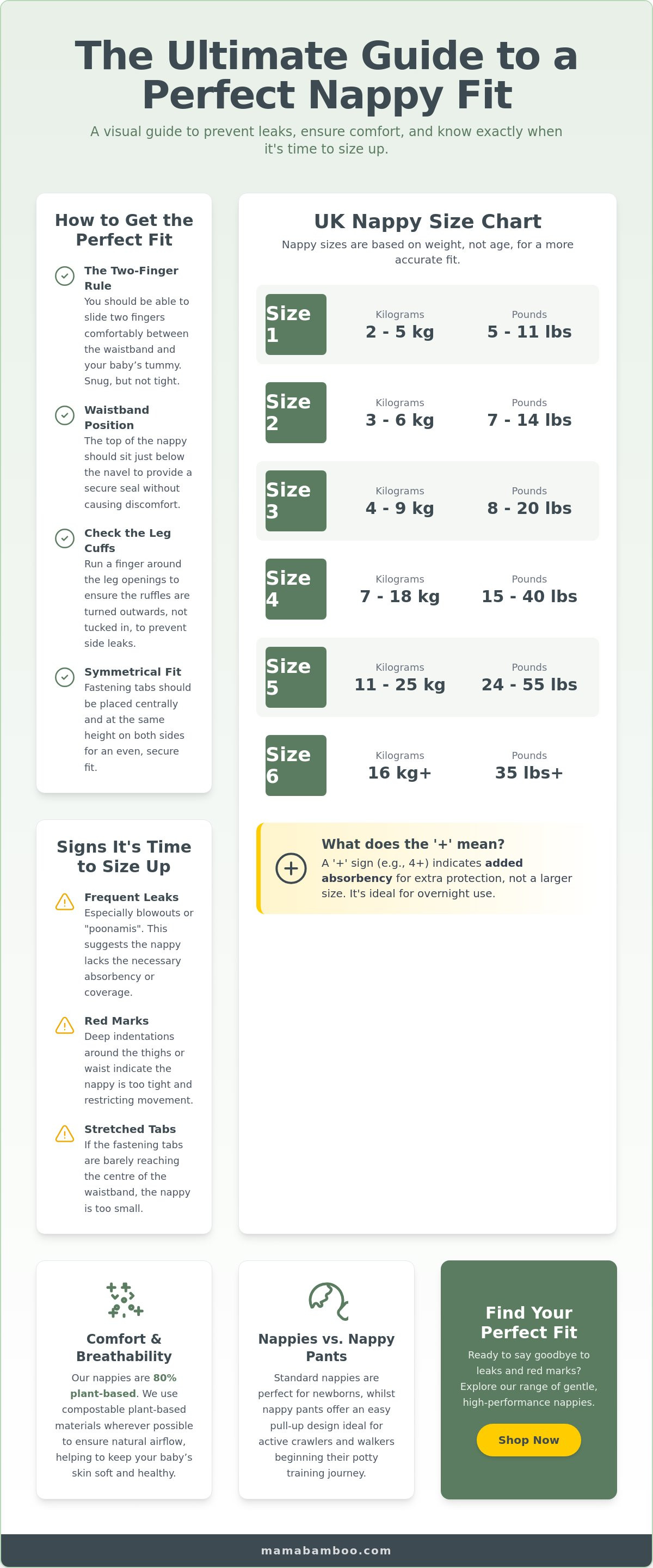
The following table provides a general guide for standard UK sizing. Use this as a starting point, but always watch for the physical signs of fit mentioned in the next section.
| Nappy Size | Weight (Kilograms) | Weight (Pounds) |
|---|---|---|
| Size 0 | 1.5- 3kg | 3 - 6 lbs |
| Size 1 | 2 - 4kg | 4 - 9 lbs |
| Size 2 | 3 - 8kg | 6 - 18 lbs |
| Size 3 | 6 - 11 kg | 13 - 25 lbs |
| Size 4 | 9 - 14 kg | 19 - 31 lbs |
| Size 5 | 12 - 20 kg | 26 - 44 lbs |
| What does the "+" sign mean on nappy packs? |
|---|
You've likely seen sizes like 4+ or 5+ on the shelves. It's a common misconception that these are physically larger than the standard size. In reality, a Size 4 and a Size 4+ have the same dimensions. The "+" actually signifies added absorbency.
The Perfect Fit: How to Ensure Your Baby is Comfortable
While weight is the primary indicator in any nappy size guide uk parents use, the physical "look" and "feel" of the nappy on your baby’s body tells the real story. A nappy that fits perfectly should feel snug but never restrictive. You can easily test this using the "Two-Finger Rule." Once the nappy is fastened, you should be able to slide two fingers comfortably between the waistband and your baby’s tummy. If it feels tight or you struggle to get your fingers in, the nappy is likely too small, even if the weight range on the packet suggests otherwise.
Positioning is equally vital. The waistband should sit just below the belly button. This provides a secure seal without causing discomfort. One of the most overlooked steps is checking the leg cuffs. Following this NHS guide to changing a nappy, you should always run your finger around the leg openings to ensure the ruffles are pulled outwards. If the ruffles are tucked in, they act as a wick. They pull moisture onto your baby’s clothes and cause those frustrating side leaks.
Tactile Checks for a Secure Seal
Take a moment to look at your baby’s skin during a change. If you notice deep red marks or indentations on their thighs or waist, it's a clear signal that the nappy is too tight. Ensure the nappy is symmetrical; the fastening tabs should be placed centrally and at the same height on the waistband and angled slightly downwards. If the tabs are reaching far towards the hips, you have likely reached the limit of that size.
Preventing Leaks and Rashes
A proper fit isn't just about stopping leaks; it's essential for maintaining skin health. When a nappy is the correct size, it allows for better air circulation. This is the best defence against nappy rash. We use compostable plant-based materials wherever possible to create a breathable environment for delicate skin. Our nappies are 80% plant-based, providing a level of softness and purity that synthetic alternatives often lack. Choosing a nappy that respects your baby's skin whilst offering a secure fit is a simple way to ensure they stay comfortable through every nap and playdate.
If you're ready to try a softer, more breathable fit for your little one, you can explore our bamboo nappies guide to learn more about how our materials protect sensitive skin.
Signs it is Time to Move Up a Nappy Size
Even if you have followed a nappy size guide uk to the letter, your baby will eventually outgrow their current pack. The most reliable sign is a sudden increase in leaks, particularly the dreaded "poonami" that escapes the back or leg cuffs. This typically happens because the nappy no longer has the surface area or absorbent capacity to contain the volume. If your baby is suddenly waking up damp in the morning, it is a clear indicator that their current size can no longer manage a full night’s sleep.
Check the fastening tapes during your next change. On a well-fitting nappy, these should sit comfortably towards the centre of the waistband. If you find they are straining to reach or sitting far apart towards the hips, the nappy is becoming too narrow. Similarly, if the nappy looks like it has a "bikini" cut, exposing too much of the bottom or thighs, it is a signal that the rise is too short. A nappy should provide full coverage to remain effective and comfortable.
Physical Indicators and Behavioural Changes
The "red mark test" is a definitive signal; if you see indentations on your baby's skin after a change, the elastic is under too much tension and requires a larger size. As your baby becomes more active, you might also notice they become frustrated or wriggly during changes. This is often the perfect time to consider transitioning to Bamboo Nappy Pants, which offer a stretchy, 360-degree fit that moves with them as they begin to crawl and explore.
Weight vs. Shape: Why the Scale Isn’t Everything
The scale doesn't always tell the whole story. A baby with chunky thighs might need to move up a size whilst they are still well within the weight range of their current nappy to avoid pinching. Conversely, a baby with a very slim waist might need to stay in a smaller size for longer to ensure a secure seal around the middle. Trust your observations of your baby's unique build over the numbers on the pack. Moving up a size early is often better than waiting for a leak to happen. If you have noticed these signs, it is time to shop our range of bamboo nappies and pants to find their next perfect fit.
Choosing Sustainable Sizing with Mama Bamboo
Finding the right fit using a nappy size guide uk is only half the battle. The materials resting against your baby's skin are just as important as the dimensions of the nappy itself. Our nappies are 80% plant-based, which provides a noticeably softer feel than traditional options that often have a heavy plastic feel. By using compostable plant-based materials wherever possible, we ensure that your baby's comfort is never compromised. This choice also helps you organise a more mindful nursery, as our packaging is designed to be fully recyclable or compostable.
High-Performance, Ethical Sizing
Bamboo is a remarkable material for baby care. The natural fibres work to regulate temperature and moisture within the nappy, keeping your little one cool in the summer and snug in the winter. This breathability is a key factor in preventing the irritation that often occurs when a nappy is slightly too small or poorly ventilated. Our B-Corp certification ensures that every size choice you make supports high standards of social and environmental impact. You can feel confident that your purchase supports both your baby’s immediate comfort and the health of the world they will inherit.
Transitioning to Nappy Pants
As your baby reaches the crawling and walking stages, their needs change. Bamboo Nappy Pants are the natural next step in your baby’s journey. These provide a flexible, 360-degree stretchy fit that accommodates developing motor skills without the restriction of traditional tabs. They are particularly helpful for active toddlers who find it difficult to stay still during a change. A subscription service can be a wonderful way to manage this transition. It allows you to adjust sizes or swap to nappy pants easily, ensuring you always have the right fit delivered to your door whilst your baby continues to grow and explore.
Embrace Every Milestone with Confidence
Finding the right balance between weight and comfort doesn't have to be a source of anxiety. By using this nappy size guide uk, you've learned to look for the subtle signs of growth, from the way the waistband sits to the presence of those tell-tale red marks. Transitioning through sizes is a natural part of your baby's development. Choosing high-performance materials like bamboo ensures their skin remains protected and dry throughout every wriggle and crawl.
We are proud to be B-Corp Certified, reflecting our commitment to ethical standards and the well-being of the next generation. Voted "Best Eco Nappy" by UK parents, our nappies provide a gentle, 80% plant-based solution that respects your baby's delicate skin. We've even ensured our packaging is fully recyclable or compostable to help you maintain a more mindful home life. You can trust that every choice you make here supports a healthier future for your little one.
Find the perfect fit for your baby with our 80% plant-based bamboo nappies
You're doing a wonderful job, and we're here to support you through every change and every quiet night's sleep.
Frequently Asked Questions
What weight is a size 1 nappy for in the UK?
Every brand is slightly different. A size 1 nappy is typically designed for babies weighing between 2kg and 4kg. This size is usually the first newborn stage. If you're consulting a nappy size guide uk, you'll see this range covers most infants for their first few weeks of life before they begin their next growth spurt and require a larger rise.
Can a nappy being too big cause leaks?
Yes, a nappy that is too large will almost certainly cause leaks because it cannot create a secure seal around your baby's legs and waist. If there are visible gaps between the material and the skin, moisture will escape before the absorbent core can capture it. Ensuring a snug fit is just as vital as choosing a size that isn't too tight; both extremes lead to messy accidents.
How many nappies of each size should I stock up on?
It is best to avoid overstocking smaller sizes like 0 and 1, as newborns can grow out of them in just a few weeks. A newborn typically requires around 10 changes per day. We recommend keeping a couple of weeks' worth of stock at a time to ensure you don't end up with surplus packs when it's time to transition to a larger, more breathable fit.
Why does my baby have red marks on their legs even if the nappy feels loose?
Red marks on a baby who seems to have a loose-fitting nappy are often caused by the leg ruffles being tucked inwards rather than pulled out. This creates friction and prevents the nappy from sitting correctly against the skin. Always run your finger around the leg cuffs to ensure the ruffles are flared outwards, which protects delicate skin and prevents side leaks. This simple check ensures the 80% plant-based materials can do their job effectively.


