

You reach into the cot to soothe your little one, only to find their babygrow is sodden right up to the shoulder blades. It is a moment of pure exhaustion for any parent, especially when it means another midnight laundry session and an unsettled, wet baby. Knowing how to stop nappy leaks up the back is essential for your peace of mind and your baby’s comfort, yet it is a challenge many families face as their little ones grow and become more active.
We understand that you want a solution that is both effective and gentle. This guide reveals the anatomical and material secrets to ending those frustrating waistband leaks whilst keeping your baby’s skin healthy. By focusing on high-quality, 80% plant-based materials like bamboo, you can provide superior absorbency and rapid wicking without compromising on softness or ethical standards.
We will explore the nuances of nappy architecture, provide a step-by-step check for the perfect fit, and help you decide when it is time to transition to nappy pants. You can look forward to a leak-free night's sleep and the confidence that your baby is protected by the best in thoughtful, sustainable care.
Key Takeaways
- Understand why the 'flood effect' and anatomical gaps cause liquid to bypass the waistband whilst your baby sleeps.
- Master the 'high-back' fitting technique to learn exactly how to stop nappy leaks up the back and ensure a dry night's rest.
- Discover why 80% plant-based nappies featuring bamboo fibres offer faster wicking speeds to catch liquid before it escapes.
- Identify the key signs that your baby is ready to size up or transition to nappy pants for a more secure, 360-degree fit.
- Maintain skin health and breathability by using nappies made with compostable plant-based materials wherever possible.
Why Do Nappies Leak Up the Back? Identifying the Root Causes
Understanding why your baby’s outfit is ruined helps you take the first step in learning how to stop nappy leaks up the back. It isn't always a sign of an inferior product; often, it is a simple clash between physics and anatomy. Several factors contribute to these messy moments, ranging from the speed of the liquid to the way your baby’s clothes fit over their nappy.
- The 'Flood Effect': This occurs when the volume of liquid arrives faster than the nappy core can absorb it. If the material cannot wick moisture away instantly, the liquid travels along the surface toward the easiest exit.
- Anatomical Gaps: When a baby lies flat, gravity doesn't help pull liquid into the absorbent centre. Instead, a flat waistband creates a 'slide' for liquid to escape. The design of the modern Diaper has evolved, yet maintaining a snug seal against the small of the back remains the biggest challenge for many brands.
- Compression Leaks: Tight vests, leggings, or car seat straps can squeeze a nappy that is already damp. This pressure forces liquid out of the absorbent layers and onto the clothing.
- The 'In-Between' Size Trap: Babies often grow in length before they fill out. You might find your baby is too tall for their current size, causing the nappy to sit too low, yet they are still too slim for the leg cuffs of the next size up.
The Science of the 'Poo-nami'
Newborn explosive stools are liquid in nature and arrive with significant force. Without a physical barrier at the rear, there is nothing to catch the flow before it reaches the waistband. Modern nappies, specifically those made using compostable plant-based materials wherever possible, often include a deeper 'pocket' or an elasticated back. These features act as a dam, holding the stool in place whilst the core begins the absorption process.
Is it a Fit Issue or a Capacity Issue?
If the nappy feels heavy and sodden when a leak occurs, you likely have a capacity issue, suggesting it is time to size up. However, if the nappy is relatively dry but the vest is wet, the issue is fit or wicking speed. A compression leak is liquid being forced out of a saturated core by external pressure. Choosing 80% plant-based nappies with high-quality bamboo fibres can help, as they often absorb liquid more rapidly than standard synthetic alternatives.
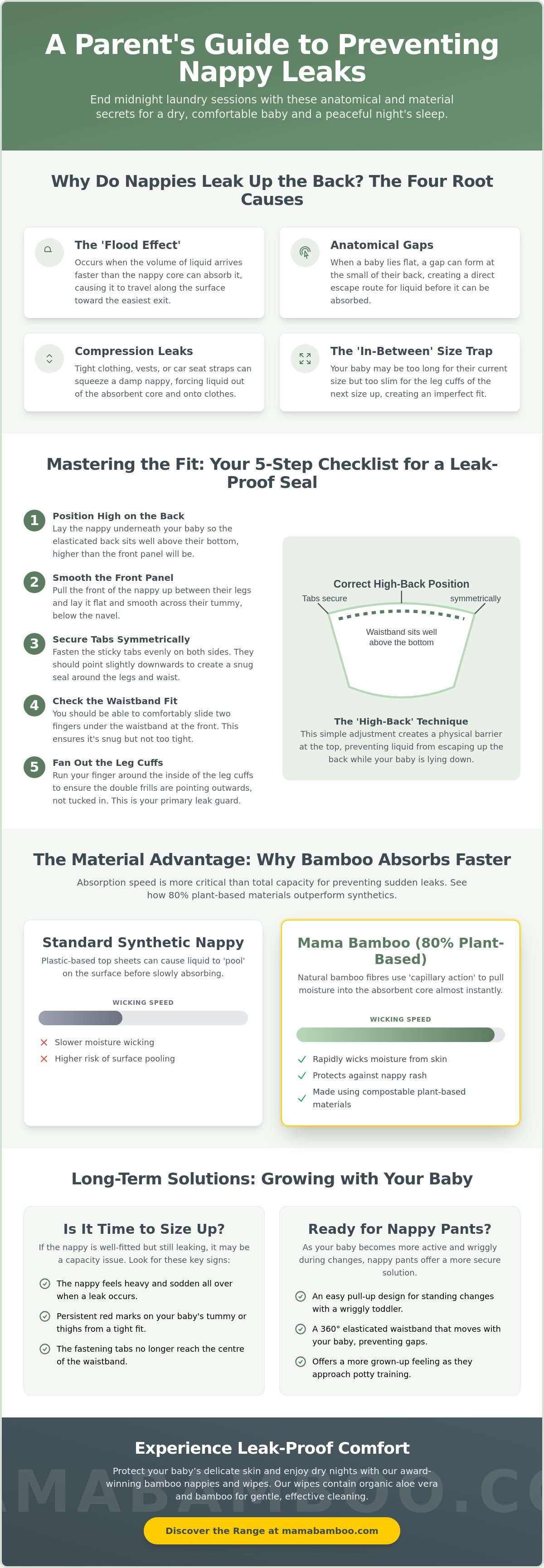
Mastering the Fit: 5 Steps to Prevent Waistband Leaks
Achieving a reliable seal depends entirely on your technique during the change. Even the most absorbent core can fail if the architecture of the fit allows for gaps. Learning how to stop nappy leaks up the back starts with a few simple adjustments to your routine that ensure the nappy stays snug against your baby’s skin.
-
The 'High-Back' Technique: Before fastening the tabs, pull the rear of the nappy
The Role of Material: Why 80% Plant-Based Nappies Absorb Faster
While mastering the fit is a significant hurdle, the materials you choose are just as influential. Many parents focus solely on how much a nappy can hold, but the speed of absorption is the real secret behind how to stop nappy leaks up the back. If the top layer cannot process liquid instantly, it will travel across the surface, often escaping through the waistband before the core even has a chance to react.
Standard synthetic nappies often use plastic-based top sheets that can struggle with the rapid flow of a 'poo-nami'. In contrast, bamboo fibres possess a natural structure that excels at moisture management. Our nappies are 80% plant-based and are made using compostable plant-based materials wherever possible. This construction ensures a stable core that doesn't clump or sag when wet, maintaining a consistent barrier against your baby's skin. To experience this superior performance, you can explore our Bamboo Nappies designed for maximum wicking speed.
Wicking Speed and Leak Prevention
The secret lies in the 'capillary action' of bamboo. These natural fibres pull liquid into the absorbent core significantly faster than synthetic alternatives. By wicking moisture away from the surface immediately, the nappy prevents liquid from sitting or 'pooling'. This rapid transition is essential to stop liquid from running up the back whilst your baby is lying down. It provides that extra second of security needed during a heavy wetting episode.
Skin Health and the Dryness Barrier
Keeping the back area dry isn't just about avoiding laundry; it's about protecting delicate skin. Constant exposure to moisture can lead to severe nappy rash, which causes significant distress for both you and your little one. A breathable back sheet allows air to circulate, reducing the dampness that irritates the skin. When leaks do happen, it's vital to use Bamboo Baby Wipes that contain organic aloe vera and bamboo to cleanse the area gently without stripping away natural oils. This combination of breathable materials and soothing botanicals ensures your baby stays comfortable even between changes.
Long-Term Solutions: Sizing Up and Nappy Pants
As your baby enters new developmental stages, the strategies you use to keep them dry must evolve. Sometimes, the most effective way to learn how to stop nappy leaks up the back is to recognise when your current size no longer meets their physical needs. If the waistband consistently sits more than two centimetres below the belly button, or if you notice red marks around the thighs, the 'rise' of the nappy is likely too short to provide a proper barrier.
Managing a night-time heavy wetter often requires a specific approach. Many parents find success by using a nappy one size larger specifically for bed. This provides a greater surface area of absorbent core to handle long stretches of sleep. Our subscription model at Mama Bamboo allows you to easily swap sizes or mix packs as your baby grows, ensuring you always have the right fit on hand. It's a simple way to stay ahead of growth spurts without the stress of running out of the correct size.
Is it Time for Bamboo Nappy Pants?
Rolling and crawling are joyous milestones, yet they introduce new movement that tests the seal of a traditional nappy. When your little one becomes active, the tabs on a standard nappy can shift, creating gaps at the small of the back. Bamboo Nappy Pants are superior for this stage because they feature a 360-degree elasticated waist. This design provides a consistent, snug seal that moves with your baby, significantly reducing the risk of a back leak during play or whilst they are wriggling amongst their blankets.
Building a Sustainable Nappy Routine
Transitioning between sizes doesn't have to result in waste. We recommend keeping a few nappies from the smaller size for daytime use whilst introducing the larger size at night. This helps you use up your stock whilst prioritising maximum protection during the longest sleep intervals. You can feel confident in your choice knowing that our nappies are 80% plant-based and made using compostable plant-based materials wherever possible. To support your eco-conscious home, all our packaging is fully recyclable or compostable, ensuring your parenting journey remains as mindful as it is dry.
Embrace Dry Nights and Peaceful Mornings
Learning how to stop nappy leaks up the back is a journey of understanding both your baby's unique shape and the technology behind their protection. By mastering the high-back fitting technique and choosing materials with superior wicking speeds, you can transform midnight laundry sessions into a thing of the past. Remember that as your little one reaches new milestones like crawling or rolling, their needs will shift; staying observant about their fit and readiness for nappy pants ensures they remain comfortable and dry.
At Mama Bamboo, we are dedicated to supporting your parenting journey with products that prioritise both your baby's skin and the world they will inherit. As a B-Corp Certified brand recognised for ethical excellence, we offer award-winning bamboo absorption technology that works whilst you sleep. Our flexible subscription service makes it simple to change sizes as your baby grows, ensuring you always have the perfect fit delivered to your door.
End the 'poo-namis' with Mama Bamboo’s 80% plant-based nappies and regain your confidence in every change. You've got the knowledge and the tools to keep your baby happy, healthy, and beautifully dry.
Frequently Asked Questions
Should I size up in nappies if they are leaking up the back?
Sizing up is often the most effective solution if the nappy core is reaching its limit or if the waistband sits too low on your baby's back. A larger size offers a taller rise and increased absorption capacity to manage larger volumes of liquid. You should check that the leg cuffs remain snug to avoid leaks in other areas, but a higher back is frequently the answer to persistent waistband issues.
How tight should a nappy be at the back to stop leaks?
The nappy should be snug enough to leave no visible gap against the skin whilst still allowing your baby to breathe and move comfortably. You can use the two-finger rule to check the fit; if you can slide two fingers into the waistband, it is likely correct. Angling the tabs slightly downwards helps to tension the top edge, creating a secure seal that prevents liquid from sliding up and out.
Why does my baby only leak out of the back at night?
Night-time leaks usually occur because your baby spends several hours lying flat, which allows liquid to travel across the top sheet rather than being pulled into the core by gravity. Because the nappy is worn for a longer duration, the absorbent material may also reach its maximum capacity. Ensuring the back is pulled up high before bed is a key step in learning how to stop nappy leaks up the back during sleep.
Can tight clothing cause nappy blowouts up the back?
Tight clothing is a primary cause of compression leaks. If a babygrow or vest is too small, it puts physical pressure on a damp nappy and squeezes the liquid out of the absorbent layers and onto the fabric. Always ensure there is a little extra room in the crotch of your baby's clothing to allow the nappy to expand naturally as it absorbs moisture throughout the day.
Are bamboo nappies better for heavy wetters who leak?
Bamboo nappies are an excellent choice for heavy wetters because the natural fibres have a faster wicking speed than many standard synthetic alternatives. This rapid capillary action is a vital part of how to stop nappy leaks up the back, as it pulls liquid into the core before it has the chance to escape. Our 80% plant-based nappies provide this superior absorption whilst remaining exceptionally gentle on your baby's delicate skin.


