

Did you know that a 2026 study by the US Food and Drug Administration found that at least half of the baby formula samples tested contained traces of phthalates and PFOS?
It's a startling figure that highlights why so many parents are now looking closer at the hidden ingredients in their favourite nursery essentials. You want your baby's world to be a sanctuary of softness and safety, yet the complex language of chemical labels often creates more anxiety than clarity. Understanding the role of Endocrine Disruptors is the first step in creating a more mindful environment for your little one to grow and thrive.
We believe that protecting your baby shouldn't feel like a constant battle against confusing marketing claims. This guide offers a clear path through the noise, providing the science-backed knowledge you need to feel truly confident in your daily choices. We'll aim to clarify the recent 2026 regulatory shifts and give you a practical list of high-impact swaps that prioritise your child's long-term health and comfort.
What are Endocrine Disruptors and Why are Babies Vulnerable?
Hormones act as the body's silent messengers, orchestrating a complex "endocrine dance" that regulates your baby's growth, metabolism, and even their behaviour. When these signals are interrupted, it can impact their delicate development.
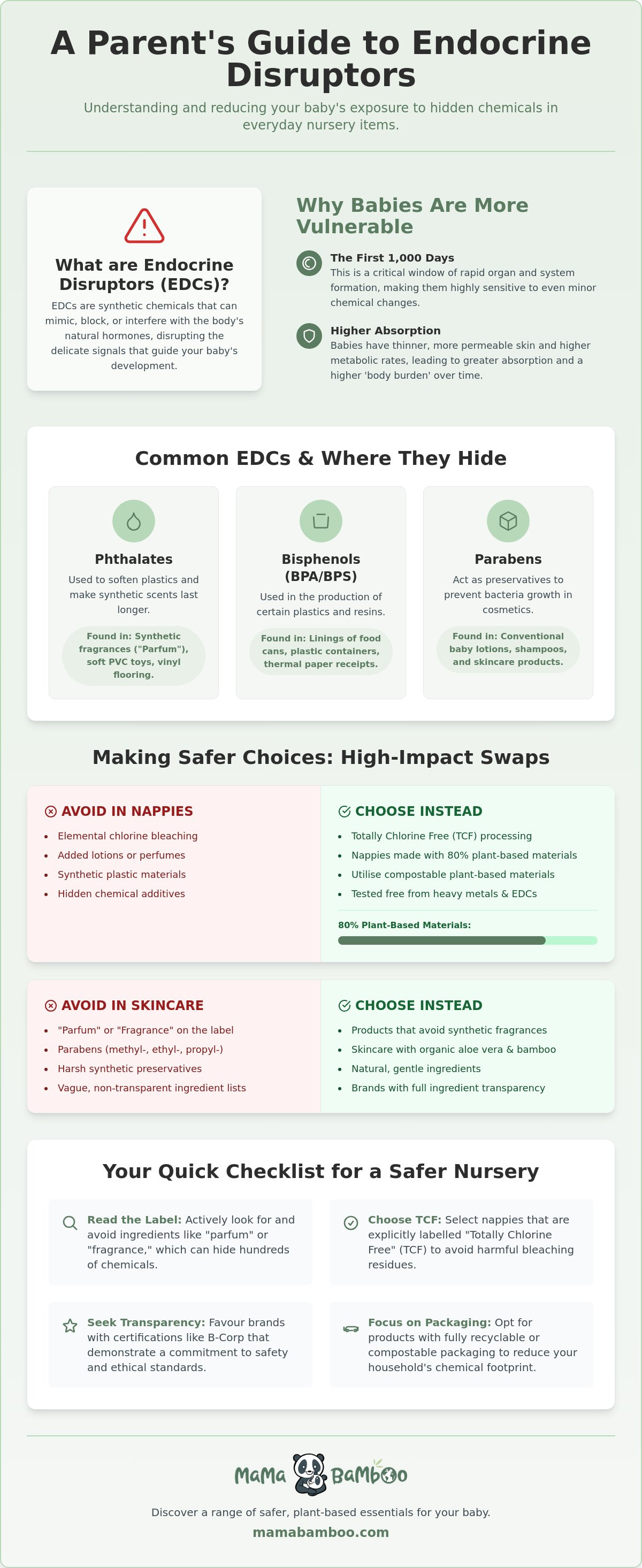
So, What are endocrine disruptors? (EDCs)
These substances are synthetic chemicals that interfere with the body's natural signalling system. They can mimic, block, or alter the levels of natural hormones, leading to unexpected changes during critical growth phases.
The first 1,000 days of life represent a unique window of vulnerability. During this period, your baby's organs and systems are forming at a rapid pace; this makes them highly sensitive to even tiny chemical changes.
Common Endocrine Disruptors often found in household items include phthalates, used to soften plastics, and bisphenols like BPA or BPS. Parabens are another common culprit, often acting as preservatives in conventional skincare products.
The Cumulative Effect of Daily Exposure
Small, frequent exposures can lead to what scientists call 'body burden'. This refers to the total accumulation of chemicals in the body over time. Infants are particularly susceptible because they have thinner skin and higher metabolic rates than adults. They absorb substances more readily whilst their developing systems work harder to process them. It's not about one single product. Instead, it's about the collective impact of the items that touch your baby's skin every single day.
Common Sources of EDCs in the Nursery and Household
Identifying potential risks in your home environment can feel like a daunting task. Many common sources of endocrine disruptors are found in everyday items, from soft plastic toys made of PVC to the linings of food containers containing bisphenols. These chemicals often hide in plain sight.
Lotions and Shampoos
Phthalates are frequently used to help synthetic scents linger longer in the air or on your baby's skin. This is why we suggest a simple "turn up your nose" rule. If a product has a strong, artificial scent, it's a clear signal that synthetic fragrances and potential Endocrine Disruptors might be present. We promise, non of Mama Bamboo's babycare products contain synthetic fragrances or phthalates.
The greenwashing trap can make this even more complex. You might see products marketed with natural-looking imagery and individual organic ingredients, but that still list "parfum" or "fragrance" in their detailed ingredients. These are umbrella terms that can mask hundreds of undisclosed chemicals.
Nappies and Wipes
Traditional nappies often bleach the raw materials to make them bright white, which can leave behind trace residues of chemicals. It's much safer to look for nappies that are Chlorine Free (ECF or TCF). Many conventional options also include lotions or scents embedded in the liners.
To avoid these hidden EDCs, you might consider more natural bamboo nappies that are ECF and utilise compostable plant-based materials rather than oil-based plastics. These choices prioritise your baby's skin health without the need for synthetic additives.
Mindful Choices: Reducing EDC Exposure in Your Baby’s Routine
Reducing exposure to Endocrine Disruptors is about making high-impact changes where they matter most.
Nappies - Your choice of nappy is one of the most impactful decisions you'll make as a parent.
Selecting bamboo nappies that are OEKO-TEX certifed and approved by Allergy UK, tested to be free from heavy metals and free of all Endocrine Disruptors, offers a layer of protection during these vital early years. Nappies and wipes are in constant contact with your baby's skin for years. By choosing natural plant-based nappies you can significantly reduce their interaction with synthetic plastics.
Skincare - Avoiding parfum and synthetic fragrance in all wash-off and leave-on products.
Whilst many brands use the label "fragrance-free," this doesn't necessarily mean synthetic, chemical free. Some brands use chemicals to mask the scent of other chemicals.
We believe a more transparent approach is necessary. Natural ingredients like organic aloe vera and bamboo have their own gentle, inherent scents. We focus on avoiding synthetic fragrances instead. Mama Bamboo skincare prioritises ingredient purity to ensure that delicate scalps are nourished without the risk of disruption. This focus on organic aloe vera and bamboo provides a soothing experience that supports your baby's skin barrier naturally and safely.
As the National Institute of Environmental Health Sciences on EDCs notes, reducing contact with synthetic chemicals is a key part of modern health. It's about progress over perfection. You don't need to change everything overnight. Every mindful swap you make creates a safer, more nurturing world for your little one to grow in.
Creating a Nurturing Sanctuary for Your Little One
Protecting your baby from Endocrine Disruptors isn't about achieving perfection in an imperfect world; it's about making steady, conscious decisions that prioritise long-term health. By focusing on high-frequency items like nappies and wipes, you're significantly reducing your baby's daily chemical exposure whilst providing them with superior comfort.
Our commitment to transparency as a B-Corp certified brand means we do the heavy lifting for you. Our nappies are OEKO-TEX certified and approved by Allergy UK. Our skincare is enriched with organic aloe vera and bamboo. We avoid synthetic fragrances to protect your baby's delicate system, focusing instead on the natural integrity of our ingredients.
These thoughtful swaps provide the quiet reassurance that your baby is wrapped in safety every single day.
Discover our range of bamboo-based, EDC-conscious nappies and skincare
You're doing a wonderful job navigating the complexities of modern parenting. We're here to walk this path with you, supporting your journey toward a more mindful and protective home environment for your family.
Frequently Asked Questions
Can endocrine disruptors affect my baby's future fertility?
Scientific research indicates that Endocrine Disruptors can interfere with the hormonal signals responsible for reproductive development. Because these chemicals mimic or block natural hormones, exposure during the first 1,000 days may have long-term effects on future fertility. It's why choosing products with high standards of purity is a protective step for your child's long-term well-being. Focusing on clean ingredients now supports their healthy development for years to come.
Are all products marketed as plastic-free safe from endocrine disruptors?
Not all products marketed under broad terms are automatically free from harmful chemicals. Whilst avoiding certain plastics is helpful, many items still use synthetic fragrances or preservatives that act as Endocrine Disruptors. We prefer to focus on specific material and ingredient transparency, rather than relying on vague marketing labels. True safety comes from understanding the specific composition of every item in your nursery.
How can I tell if my baby's shampoo contains endocrine disruptors?
You can identify potential risks by checking the ingredient list for terms like "parfum" or "fragrance," which often hide phthalates. Look for brands that highlight specific, gentle ingredients instead. For example, our shampoo contains organic aloe vera and bamboo to nourish the scalp without the need for synthetic fillers. Always choose products that openly list their components and avoid synthetic fragrances to ensure the highest safety standards for your little one.
Is it possible to completely eliminate EDCs from my home?
It is virtually impossible to remove every trace of these chemicals from a modern home, but you can significantly lower your baby's exposure. Focus on high-frequency items like nappies, wipes, and skincare where the contact is most constant.

Disclaimer
This article was created with the assistance of artificial intelligence and has been reviewed for accuracy; however, it is intended for informational purposes only.


