

The 2018 ban on microbeads was a landmark victory for our oceans, but it left a quiet, troubling loophole in your nursery cupboard. Whilst most of us believe these tiny plastics are a thing of the past, current UK regulations only cover rinse-off products, meaning your baby’s favourite nappies and leave-on lotions or creams could still contain microbeads and microplastics.
You want the very best for your little one, yet decoding complex ingredient and materials lists often feels like a full-time job. It's completely natural to feel anxious about environmental impact or distrustful of mainstream marketing that feels more like greenwashing than genuine care. We want to help you to see through the labels and be confident knowing exactly which hidden plastics might still be lingering in your baby's routine.
What Are Microbeads and Why Are They a Concern for UK Parents?
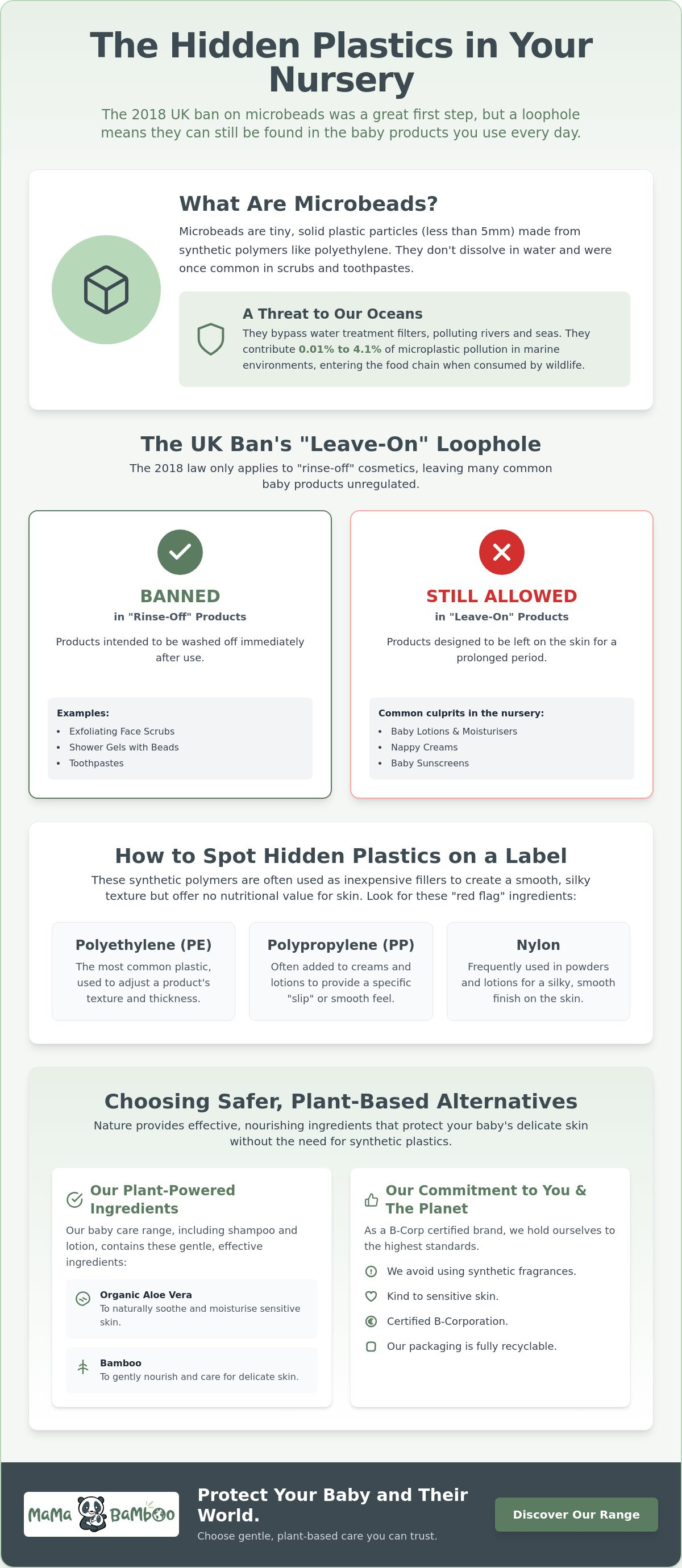
Understanding the materials that touch your baby's skin is a vital part of modern parenting. Many parents first asked What are microbeads? when the UK government introduced a ban on their use in 2018. These tiny synthetic polymer particles, typically made from polyethylene or polypropylene, were once common in exfoliating scrubs and toothpastes. Whilst the 2018 legislation was a positive step, it specifically targets "rinse-off" products. This means the ban doesn't currently extend to "leave-on" items like lotions or creams, and it doesn't cover clothing or nappies at all, which is why a cautious approach to ingredient labels remains so important for your family.
The environmental impact of these plastics is a significant worry. Because they are water-insoluble and often smaller than 5mm, they easily bypass filtration systems at water treatment centres. They flow directly into our rivers and oceans. Research suggests microbeads contribute between 0.01% and 4% of the total microplastic pollution in our marine environments. Once there, they are often mistaken for food by marine life, allowing synthetic plastics to enter the food chain. For a parent, this isn't just an abstract ecological issue; it's about the health of the world our children will inherit.
Beyond the environment, there's the question of what we put on delicate newborn skin. A baby's skin is thinner and more permeable than our own, making it more sensitive to synthetic additives. Many parents are moving away from mainstream products that rely on these plastics, choosing instead to trust ingredients and materials with natural integrity.
The Difference Between Microbeads and Microplastics
It's easy to feel confused by the terminology used in "green" marketing. A microbead is defined by its function; it's a solid plastic particle used specifically for scrubbing or exfoliating. Microplastic is the broader umbrella term for any plastic fragment smaller than 5mm. Even if a product doesn't have visible "scrubbing beads", it may still contain liquid or semi-solid microplastics. These are often used to improve the "slip" or texture of a lotion or they shed from polyester clothing with every wear and wash.
Choosing products with transparent ingredient lists helps you ensure that these hidden plastics stay far away from your nursery.
Identifying Hidden Plastics: The Leave-On Loophole and Ingredient Labels
The 2018 UK ban provided a sense of relief for many, yet it was only a partial solution. Much like the Microbead-Free Waters Act of 2015 across the Atlantic, our domestic regulations focus almost entirely on "rinse-off" products. This leaves a significant loophole for "leave-on" skincare and clothing, where microbeads and microplastics and other synthetic polymers are still legally permitted. For parents, this means that the very lotions, sunscreens and materials designed to sit on a baby’s delicate skin for hours could potentially contain hidden plastics.
In clothing, you may see polyester listed as the main ingredient. And in nappies, you may see Polyester or Polyethylene listed to describe the cover of the nappy which sits against your babies' skin or the liner inside the nappy which helps to make it waterproof. Several brands will lead with 'cotton enhanced' or similar terminology and quietly list Polyester as the main material in the foot notes. These brands often use less than 30% plant based material.
For lotions, you need to check the INCI list - Learning to read an International Nomenclature of Cosmetic Ingredients (INCI) list is your best defence. When you scan the back of a bottle, look for "red flag" terms that indicate synthetic plastics. These often appear as:
-
Polyethylene (PE): The most common plastic used for texture.
-
Polypropylene (PP): Often used to provide a specific "slip" to creams.
-
Nylon: Frequently added for a silky feel in powders or lotions.
Manufacturers often use these synthetic polymers because they are inexpensive fillers. They create a smooth, silky texture on the skin, but they offer no nutritional value or genuine hydration. Instead of nourishing your little one, these ingredients simply sit on the surface or wash away into the environment later.
Choosing products with transparent, plant-based foundations, such as baby lotion enriched with organic aloe vera, ensures you are providing care rooted in natural integrity rather than synthetic shortcuts. We also avoid synthetic fragrances in our formulations, ensuring a gentle experience for sensitive skin.
Common Baby Products That May Still Contain Microplastics
Scrutinise your nursery essentials, particularly moisturising lotions, nappy creams, and baby sunscreens. These categories are amongst the most likely to contain synthetic polymers. In these leave-on products, microplastics often function as emulsifying agents to keep ingredients blended or as film-formers to create a water-resistant barrier. Whilst these functions are useful, there are safer, plant-derived ways to achieve the same results. By looking for specific ingredient highlights like organic aloe vera and bamboo, you can feel confident that your baby's skin is being protected by nature, not plastic.
Check the full materials list in your nappies and nappy pants, particularly focus on the materials used for the covers, which lay against your baby's skin, and the liner which sits hidden inside the product. Unless you are using a very transparent brand's products, these elements are amongst the most likely to contain synthetic polymers. Many 'eco-nappies' actually contain very little plant-based material and market themselves as 'eco' based on carbon offsetting or factory processes not materials, or use clever marketing speak to promote 'cotton-enhanced' covers which contain less than 30% plant-based material or 'pure' products based solely on the lack of chlorine used.
In the last few years, a few of the big nappy brands have been made to change the names of their 'eco' nappies because they were considered misleading. Unfortunately, several others continue the practice, playing on words such as pure, bamboo, eco and nature.
Choosing Safer, Sustainable Alternatives for Your Family
Moving away from synthetic ingredients doesn't mean compromising on the comfort or efficacy of your baby's routine. Plant-based alternatives provide the same silky textures and protective barriers without the environmental or health costs associated with microbeads or microplastics.
By choosing ingredients and materials with natural integrity, you ensure that what touches your baby's skin is as pure as possible. Nature already provides the perfect building blocks for skin health; we simply need to embrace them.
Our commitment to your family's well-being is reflected in our choice of materials and ingredients.
Our nappies and nappy pants are made using 100% bamboo viscose covers for the top and bottom sheets, and 100% bio-based compostable liners. They are chlorine, alcohol, paraben, phthalates and PFAS free. Our nappies and pants are recommended by Allergy UK. We do not compromise on your baby's health.
Our range of baby care, including our baby shampoo and lotion, contains organic aloe vera and bamboo to soothe and nourish sensitive skin naturally. All our baby care products are synthetic fragrance free.
As a B-Corp certified brand, we prioritise the planet and the health of the next generation over simple profit margins.
Explore our range of baby skincare containing organic aloe vera and bamboo
Frequently Asked Questions
Are microbeads still legal in the UK in 2026?
Yes, they're still legal in specific categories. Whilst the manufacture and sale of rinse-off personal care products containing plastic microbeads have been prohibited in England since 2018, the ban doesn't extend to "leave-on" products. The latest government guidance, reviewed in February 2026, confirms that lotions, sunscreens, and creams can still legally contain these tiny synthetic particles. This makes your role as a gatekeeper for your nursery essentials more important than ever.
How can I tell if my baby lotion contains microplastics?
You can identify hidden plastics by scanning the ingredient list for synthetic polymers. Look for terms such as Polyethylene (PE), Polypropylene (PP), or Nylon, which are often used to create a silky feel or specific texture. Because the UK ban is limited to items that are rinsed off immediately, many leave-on baby lotions still rely on these inexpensive plastic fillers to improve the product's "slip" on the skin.
Do Mama Bamboo products contain any microbeads or microplastics?
No, our baby care range is formulated without any synthetic polymers or hidden plastics. We believe in natural integrity, which is why our baby shampoo and baby lotion contain organic aloe vera and bamboo to nourish your little one's delicate skin. We avoid synthetic fragrances, opting instead for the gentle, natural aroma of our ingredients.
Our nappy and nappy pant range is one of the few available products which features 100% plant based covers and liners. We're committed to your family's safety and the health of the environment.
Why were microbeads only banned in rinse-off products?
The 2018 regulations focused on products that go directly down the drain, as these were considered the most immediate threat to marine life. Authorities targeted face scrubs and toothpastes because they bypass filtration systems and enter our waterways instantly. However, this narrow focus created a loophole for leave-on products. Even though a lotion stays on the skin initially, it eventually washes off during bath time, contributing to the same microplastic pollution the ban intended to stop.

Disclaimer
This article was created with the assistance of artificial intelligence and has been reviewed for accuracy; however, it is intended for informational purposes only.


