

What if the daily "nappy wrestle" isn't just a phase, but a clear signal that your baby is ready for their next big developmental leap? As your little one begins to crawl, cruise, or climb, you might notice that traditional taped nappies struggle to keep up with their new-found energy. It's a common challenge for parents who want to balance reliable leak protection with a gentle, skin-friendly experience. Knowing exactly when to switch to nappy pants can transform your changing routine from a struggle into a seamless part of your day.
We understand that you want the best for your baby's skin and the world they'll inherit. With approximately 3.6 billion single-use nappies sent to landfill or incineration in England each year, making a mindful choice feels more important than ever. You deserve a solution that supports your baby's movement whilst honouring your environmental values. This guide will help you identify the key developmental signs of readiness and show you how to choose 80% plant-based bamboo nappy pants. You'll discover how to maintain your commitment to sustainable parenting whilst ensuring your active explorer stays dry, comfortable, and protected during every adventure.
Key Takeaways
- Learn to identify the physical milestones, such as pulling to stand or crawling, that signal your baby's readiness for a more flexible fit.
- Understand the "nappy wrestle" and discover why developmental behaviour is a more reliable guide than age for when to switch to nappy pants.
- Compare the design of taped nappies and nappy pants to ensure your active baby enjoys 12-hour protection and a comfortable, elasticated waistband.
- Master practical techniques like the "Tear and Go" method and standing changes to make your daily routine smoother and stress-free.
- Explore the benefits of choosing 80% plant-based bamboo nappy pants that avoid synthetic fragrances whilst prioritising your baby's skin health.
Identifying the Milestones: When to Switch to Nappy Pants
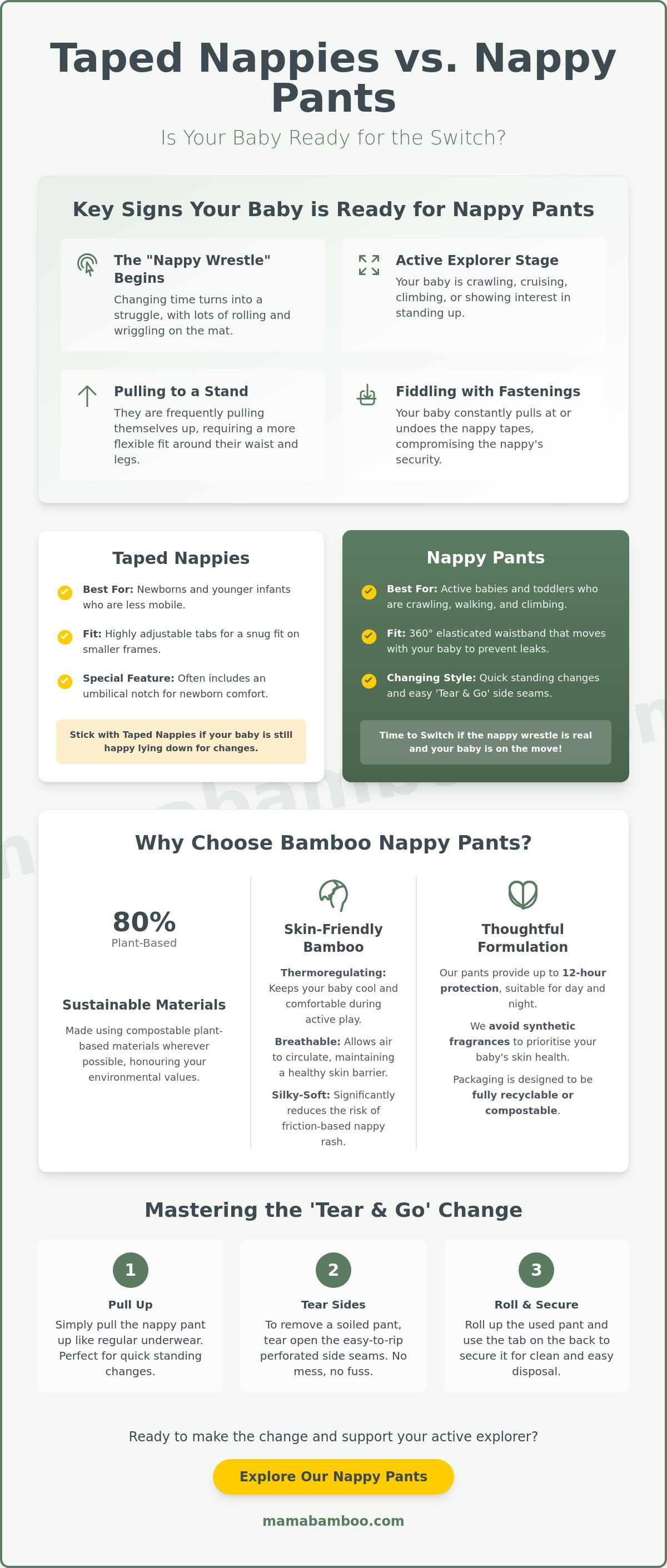
Every parent knows the moment the changing mat becomes a wrestling ring. As your little one discovers the joy of rolling and crawling, the precision required to fasten a taped nappy often disappears. This physical shift is the most reliable indicator of when to switch to nappy pants. While some brands suggest a specific age, usually around the six to nine month mark, your baby's unique developmental milestones are far more important than the calendar.
Once your baby begins to pull themselves up to a standing position, their needs change. Nappy pants, also known as training pants, offer an all-round elasticated waistband that moves with them. This design helps prevent the common "gap-leaks" that occur when a baby moves into new sleeping positions at night. Unlike fixed tapes, the flexible fit ensures that protection remains snug against their skin, no matter how much they wriggle during their slumber.
Key signs your baby is ready for the transition
Watch for the tell-tale signs of a budding explorer. If your baby is constantly pulling at their nappy tapes or resisting the changing mat with newfound strength, it's time to consider a change. Nappy pants facilitate gross motor skill development by providing a less restrictive fit. This freedom allows them to squat, climb, and cruise without the bulk or stiffness that can sometimes accompany traditional fasteners. It turns a stressful "nappy wrestle" into a quick, pull-up motion that supports their active lifestyle.
Is it too early? When to stick with taped nappies
There are times when the classic design is still the best choice for your baby's comfort. For newborns and younger infants, taped nappies remain the favourite because they allow for a highly adjustable fit around a smaller, more delicate frame. Most importantly, many newborn sizes include a specific umbilical notch to protect the sensitive navel area whilst it heals. If your baby is still content to lie still during changes and hasn't yet mastered the art of the roll, the security of a taped nappy is perfectly sufficient.
Taped Nappies vs Nappy Pants: Understanding the Construction
Understanding the structural differences is key when deciding when to switch to nappy pants. Taped nappies rely on fixed adhesive tabs, which provide a customisable fit for babies who spend most of their time lying down. However, as your child grows, these tapes can become restrictive or dig into their soft skin during movement. When you consider when to switch to nappy pants, looking at the waistband is the first step. Nappy pants replace these tabs with a flexible, all-round elasticated waistband that mimics the feel of real underwear. This 360-degree stretch allows the nappy to move in harmony with your baby's body, providing comfort whilst they explore their world.
There is a common misconception that nappy pants are less absorbent than their taped counterparts. In reality, high-quality options provide the same reliable 12-hour protection, making them suitable for both busy days and restful nights. Our nappy pants are made using compostable plant-based materials wherever possible. By choosing bamboo, you ensure that your baby's skin is surrounded by breathable fibres that naturally manage moisture. This is a vital consideration for Identifying the Milestones of physical development, as increased activity leads to higher body temperatures.
The benefits of bamboo for active toddlers
Bamboo is a miracle of nature for active little ones. Its natural thermoregulation properties help keep your baby cool in the summer and warm in the winter, which is essential when they are constantly on the move. These silky-soft fibres also significantly reduce the risk of friction-based nappy rash. Unlike synthetic alternatives, bamboo nappies and pants allow air to circulate freely against the skin, maintaining a healthy barrier and preventing irritation during those long afternoon play sessions.
Sustainability check: 80% plant-based materials
We believe in transparency at every stage of your parenting journey. Our nappy pants are crafted using 80% plant-based components, striking a careful balance between high-performance absorbency and our responsibility to the planet. This commitment extends to our packaging, which is designed to be fully recyclable or compostable. By avoiding synthetic fragrances and focusing on material integrity, we help you protect your baby today and their environment tomorrow. If you're ready to make the change, you can explore our range of sustainable nappy pants to find the perfect fit for your toddler.
Mastering the Transition: Practical Tips for Active Changes
Once you've identified the signs and decided when to switch to nappy pants, the practicalities of your daily routine will begin to shift. The most significant change is moving from a horizontal struggle to a vertical, more collaborative process. To remove a soiled nappy pant, you simply use the 'Tear and Go' method by ripping the perforated side seams. This allows you to slide the nappy away without needing to pull it down your baby's legs, which is a lifesaver during messy changes. Once removed, use the integrated tape on the back to roll the nappy into a neat bundle for the bin, ensuring disposal is as tidy as possible.
One common concern amongst parents is the 'shoe issue' during outdoor changes. Whilst it's true you'll need to slip off footwear to pull the new pants up, many find this a small price to pay for avoiding a muddy changing mat in a public park. A quick workaround is to remove just one shoe and trouser leg at a time, threading the nappy pant through before replacing them. This keeps your toddler's feet off the damp ground and speeds up the process. If you are ready to simplify your routine, you can buy bamboo nappy pants that are designed for these quick, on-the-go transitions.
Step-by-step: Your first nappy pant change
Your first attempt might feel unfamiliar, but the 'tear, wipe, step, pull' sequence quickly becomes second nature. Encourage your toddler to hold onto your shoulders or a sturdy piece of furniture whilst they are upright. This standing position makes cleaning much easier and feels less restrictive for them. To keep a wriggly toddler occupied during the 30-second change, try giving them a favourite toy or engaging them in a quick game of 'copy my face'.
Out and about: Changing in public places
Nappy pants are the favourite choice for parents who frequent baby classes and play centres, where changing facilities can often be cramped or busy. Because they don't require a large flat surface, you can perform a change almost anywhere with ease. This flexibility is particularly helpful whilst travelling or in public toilets where the fold-down mats might not feel as clean as you'd like. By mastering the standing change, you regain a sense of freedom during your daily adventures.
Why Material Matters: Choosing Sustainable Bamboo Nappy Pants
As your baby enters this active phase, the quality of what touches their skin becomes paramount. Choosing the right materials is just as important as knowing when to switch to nappy pants. Many parents express concern over the "chemical" scents often found in traditional brands. We avoid synthetic fragrance entirely. Instead, we focus on technical accuracy regarding our scent sources to protect babies with sensitive skin. Being a B-Corp means we prioritise social and environmental impact, ensuring our products are as ethical as they are effective for your growing family.
Skin health is a significant factor during this transition. Because your toddler is moving more, the risk of irritation increases. Our products contain organic aloe vera and bamboo, which work together to soothe and protect the skin barrier. Mama Bamboo avoids the term 'plastic-free' in favour of describing the end-of-life cycle of the packaging as fully recyclable or compostable. This ensures you have the facts needed to dispose of waste responsibly whilst maintaining your commitment to a more mindful lifestyle.
Transparency in every fibre
We believe in honest communication rather than vague marketing labels. We don't call our nappy pants "biodegradable" because that can be misleading; instead, we focus on the 80% plant-based reality of our construction. These pants are made using compostable plant-based materials wherever possible. This specific approach ensures that our nappy pants are kind to your baby's skin whilst remaining a responsible choice for the future environment they will inherit.
Making the switch with a Mama Bamboo subscription
Transitioning doesn't have to be a sudden leap. You can easily organise your subscription to include a mix of bamboo nappies and nappy pants, allowing you to test the waters at your own pace. This flexibility ensures you never run out during the weeks you are deciding when to switch to nappy pants full-time. Every carbon-neutral delivery arrives at your door, saving you time and reducing your environmental footprint. It is a simple way to maintain high standards of care whilst navigating the beautiful, busy milestones of toddlerhood.
Embracing Your Baby’s Next Big Leap
Transitioning to nappy pants is a wonderful milestone that celebrates your baby’s growing independence and curiosity. By observing their physical cues, such as rolling or pulling to stand, you can confidently decide when to switch to nappy pants to support their active lifestyle. This shift isn't just about making changes easier. It's an opportunity to prioritise your child's skin health with breathable, natural materials that move in harmony with them.
As a B-Corp Certified brand, we are dedicated to total transparency. Our nappy pants are 80% plant-based, providing superior skin health whilst ensuring you stay true to your sustainable parenting values. We also ensure our packaging is fully recyclable or compostable, helping you manage your household waste with confidence. You don't have to compromise on performance to protect the world your baby will inherit.
Switch to our 80% plant-based Bamboo Nappy Pants today and enjoy a smoother, more joyful changing routine. You’re doing an incredible job guiding your little explorer through these exciting new stages.
Frequently Asked Questions
What age should a baby start wearing nappy pants?
Most babies transition between six and twelve months old, though there's no set age. You'll know when to switch to nappy pants based on their behaviour rather than their birthday. If your little one has started crawling, cruising, or simply resists lying still on the changing mat, they're likely ready. This shift usually happens once they've mastered rolling and are beginning to explore their surroundings with more vigour and curiosity.
Are nappy pants as absorbent as regular taped nappies for overnight use?
Yes, high-quality nappy pants provide the same 12-hour protection as traditional taped versions. Our 80% plant-based bamboo nappy pants are designed with a powerful absorbent core that locks away moisture during long night-time stretches. The 360-degree elasticated waistband also helps prevent leaks as your baby finds new, active sleeping positions. You can rest easy knowing they'll stay dry and comfortable until morning, even if they're a particularly wriggly sleeper.
Can nappy pants be used for potty training?
Nappy pants are an excellent tool for the early stages of toilet training. Because they pull up and down like real underwear, they help your child familiarise themselves with the routine of using a potty. This design encourages independence whilst still providing reliable protection against accidents. They're a perfect bridge between traditional nappies and underwear, allowing your toddler to practice their skills without the stress of messy leaks or difficult fasteners.
How do I know what size nappy pants my baby needs?
Choosing the right size is usually based on your baby's weight, but you should also look at the physical fit. This is especially important when to switch to nappy pants, as the elasticated waist fits differently to tapes. The waistband should be snug but flexible without red marks. If you're experiencing frequent leaks or the nappy looks tight, it's often a sign to move up a size to ensure total comfort.
Do you have to take trousers and shoes off to change nappy pants?
To put on a fresh pair, you'll typically need to remove shoes and trousers to slide the legs through. However, many parents find the "one-shoe-on" method works well for quick changes whilst out and about. For removal, you don't need to take anything off; simply tear the side seams and slide the soiled nappy away. This flexibility makes them a favourite choice for active families who spend plenty of time at play centres or parks.


