

Did you know that cradle cap affects approximately 70% of infants by the time they reach three months of age? Seeing those thick, yellowish scales on your little one’s delicate scalp can feel overwhelming, and it's completely natural to worry about whether you should brush them away or leave them be. You want a solution that works without risking irritation or infection. Finding a gentle baby shampoo for cradle cap shouldn't feel like a guessing game amongst confusing marketing labels. We understand that your priority is a calm, healthy scalp achieved through transparency and care.
To further support a waste-free lifestyle, many parents choose to explore Plastic-Free Wooden Toys options from brands like Green Kidz Collective that prioritise natural materials.
In this guide, you'll discover how to manage these common scales effectively using specific, plant-based ingredients that soothe the skin. We’ll look at why choosing formulations that contain organic aloe vera and bamboo can make a difference, whilst avoiding the synthetic fragrances that often cause flare-ups. By understanding the latest safety standards, such as the 2026 MoCRA requirements and new fragrance allergen disclosures, you can build a sustainable bath-time routine with confidence. We’ll help you distinguish between vague claims and factual ingredient lists, ensuring your baby’s comfort remains at the heart of every choice you make.
Key Takeaways
- Understand the true cause of cradle cap and why these harmless oily crusts require a patient, nurturing approach rather than vigorous scrubbing.
- Identify key soothing ingredients, specifically why formulations that contain organic aloe vera and bamboo are ideal for hydrating and protecting a sensitive scalp.
- Learn a mindful two-step cleansing process, featuring a gentle baby shampoo for cradle cap, to safely manage scales whilst maintaining skin integrity.
- Explore how selecting carbon-neutral toiletries and B-Corp certified brands supports a healthier planet for the next generation to grow up in.
What is Cradle Cap and Why is a Gentle Shampoo Essential?
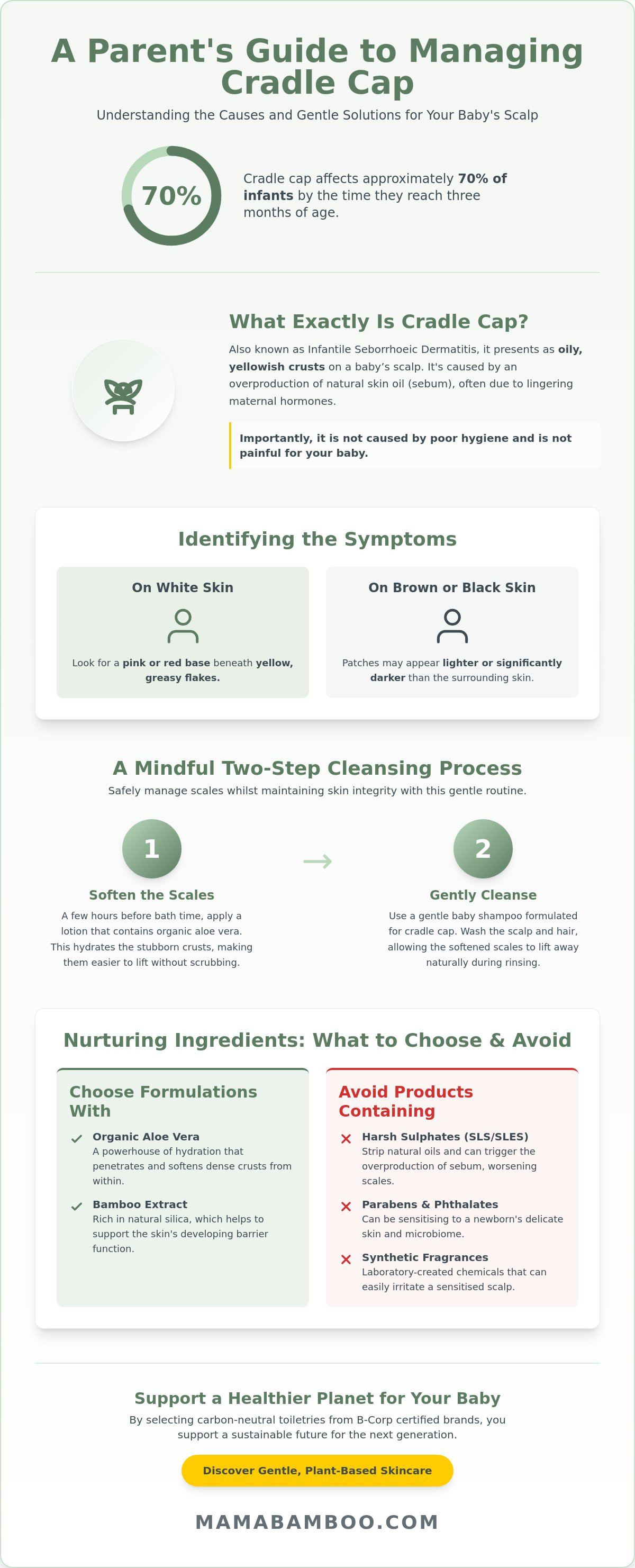
Understanding What is cradle cap starts with dispelling the myth that it's linked to cleanliness or hygiene. Scientifically known as infantile seborrhoeic dermatitis, this common condition presents as oily, yellowish crusts or scales on a baby’s scalp. It’s primarily caused by an overproduction of sebum, a natural skin oil, which is often influenced by maternal hormones still circulating in your little one’s system. Because the skin’s barrier is still developing, these oils can trap dead skin cells, creating the characteristic "cap" appearance that many parents find concerning.
Many standard baby products contain harsh detergents like Sodium Lauryl Sulphate (SLS) or Sodium Laureth Sulphate (SLES). These surfactants are effective at cleaning but are often too aggressive for a newborn’s delicate pH balance. When a shampoo strips away too much natural moisture, the scalp may overcompensate by producing even more oil, potentially worsening the scales. Using a gentle baby shampoo for cradle cap ensures the scalp is cleansed without triggering this defensive oil production, keeping the skin’s natural protective layer intact.
Identifying the Symptoms on Different Skin Tones
The appearance of these scales varies depending on your baby’s unique complexion. On white skin, you’ll typically see a pink or red base beneath yellow, greasy flakes. On brown or black skin, the patches might appear lighter than the surrounding area or significantly darker.
It’s reassuring to know that despite the crusty appearance, cradle cap isn't itchy or painful for your baby. If you notice the skin becoming very red, warm, or starting to weep, it’s best to consult your health visitor or GP to rule out a secondary infection.
The Importance of Non-Synthetic Scents
We avoid synthetic fragrance because these laboratory-created chemicals can easily irritate a sensitised scalp. Instead, we prioritise plant-derived aromas that provide a soothing sensory experience whilst maintaining skin integrity. Technical accuracy regarding scent sources matters because natural extracts are less likely to disrupt the skin’s protective barrier than complex synthetic compounds. Choosing a gentle baby shampoo for cradle cap that relies on botanical scents helps keep bath time a peaceful, irritation-free ritual for both you and your baby.
Key Ingredients to Look For: Why Bamboo and Aloe Vera Excel
When selecting a gentle baby shampoo for cradle cap, the choice of ingredients determines how effectively you can lift scales without causing redness. High-quality formulations should contain organic aloe vera and bamboo for their unique soothing properties. Aloe vera acts as a powerhouse of hydration, penetrating the dense crusts to soften them from the inside out. This makes it much easier to lift the scales during bath time without needing to scrub the sensitive skin beneath. This softening action is a cornerstone of managing cradle cap safely at home.
Bamboo extract is equally vital, as it is rich in natural silica which helps support the skin barrier function amongst infants. Whilst cheaper alternatives often rely on petroleum-derived mineral oils to create a barrier, these can sometimes clog pores or sit heavily on the skin. Plant-based extracts allow the scalp to breathe whilst providing the necessary moisture to manage the condition. Our baby shampoo is specifically formulated with these botanicals to ensure your little one's scalp remains nourished and protected.
Transparency Over Labels: Ingredient-Level Honesty
We believe in ingredient-level honesty. There is a significant difference between a product that is vaguely marketed as "natural" and one that specifies its components. For example, our skincare products contain organic aloe vera and bamboo, but we avoid labelling the entire finished formulation as "organic." This precision ensures you know exactly what is touching your baby's skin, helping you make informed decisions based on material facts rather than broad marketing claims.
Avoiding the "Nasties" in Scalp Care
A developing scalp has a delicate microbiome that is easily disrupted by harsh chemicals. To protect this ecosystem, look for products that exclude:
-
Parabens: Often used as preservatives, these can be sensitising to newborn skin.
-
Phthalates: Frequently hidden within synthetic fragrances, these are best avoided in infant care.
-
Harsh Sulphates: Such as SLS or SLES, which strip natural oils and trigger overproduction of sebum.
Choosing a gentle baby shampoo for cradle cap that is free from these irritants helps maintain the scalp's natural integrity and prevents further irritation.
The Gentle Routine: Managing Cradle Cap Step-by-Step
Establishing a consistent routine is the most effective way to clear scales whilst keeping your baby comfortable. It starts with softening the crusts. Applying a lotion that contains organic aloe vera and bamboo a few hours before bath time helps hydrate those stubborn patches. This preparation ensures that when you begin washing, the scales are ready to lift away without needing aggressive scrubbing. It is a patient process that requires a delicate touch.
Once the scales are softened, use a gentle baby shampoo for cradle cap to cleanse the area. The NHS recommends using a gentle shampoo for cradle cap to prevent further irritation. Massage the scalp with your fingertips, ensuring you don't use your nails. This mechanical action is vital for loosening the build-up of oils and skin cells. After washing, use a soft-bristled brush like our Newborn hairbrush or a clean muslin cloth to lift away the loosened flakes. Never pick at the scales with your fingernails, as this can cause small breaks in the skin that might lead to infection.
Consistency is key to a clear scalp. You can find our soothing baby shampoo to help you begin this mindful routine.
Temperature and Technique
Keep the bath water lukewarm. High temperatures can dry out a baby’s scalp, which may trigger the sebaceous glands to produce more oil in response. Use a gentle circular motion with your fingertips whilst shampooing. This helps the botanicals penetrate the scales whilst physically encouraging them to detach from the hair follicles.
Post-Bath Scalp Maintenance
Avoid rubbing the head with a towel. Instead, pat the skin dry with a soft cloth to prevent unnecessary friction. If the scalp still appears dry after the bath, applying a small amount of lotion that contains organic aloe vera can help lock in moisture. This final step protects the skin barrier and keeps the scalp nourished until the next wash.
Sustainable Choices for the Conscious Parent
Caring for your baby’s scalp health is often the beginning of a broader journey into mindful parenting. Selecting a gentle baby shampoo for cradle cap from a B-Corp certified brand ensures that your choices are backed by rigorous social and environmental standards. This certification provides quiet reassurance that the company operates with a deep sense of responsibility toward the next generation. It isn't just about what is in the bottle; it's about how that product's existence impacts the wider world your child will grow up in.
Carbon-neutral production and ethical supply chains are central to this philosophy. We believe that protecting a baby’s delicate skin shouldn't come at the cost of the environment. By choosing products housed in fully recyclable / returnable packaging, you can significantly reduce household waste.
This holistic approach to the nursery often extends to other essentials. Many families find that pairing their skincare routine with sustainable bamboo nappies creates a consistent, eco-conscious environment. These nappies are 80% plant-based and made using compostable plant-based materials wherever possible, mirroring the integrity of our liquid washes.
Why Ethical Production Matters
B-Corp certification represents a commitment to transparency that goes beyond standard marketing. It means every part of the business is audited for its impact on workers, community, and the environment. Our skincare philosophy is rooted in this same honesty. Just as our nappies are 80% plant-based, our shampoos and lotions contain organic aloe vera and bamboo to provide natural comfort. We avoid broad, misleading labels, focusing instead on specific material facts to maintain the trust of our parenting community.
Making the Switch to Mindful Toiletries
Modern parenting is busy, so we’ve made it simple to organise a subscription for your gentle essentials. This ensures you never run out of gentle baby shampoo for cradle cap whilst your baby is going through a flare-up. Every order is sent via a carbon-neutral delivery service, providing a convenient and responsible solution for UK parents. It’s a small, manageable change that contributes to a healthier future for your little one.
Embracing a Mindful Bath-time Routine
Cradle cap might look concerning, but it's a common phase that responds well to a patient, nurturing approach. By prioritising ingredient-level transparency and avoiding harsh detergents, you can support your baby's developing skin barrier effectively. Remember that softening the scales with plant-based moisture before using a gentle baby shampoo for cradle cap is the safest way to encourage healing without causing irritation. This methodical routine helps you manage the condition whilst keeping your little one’s comfort at the centre of every choice.
Choosing the right products means looking beyond the labels for factual material integrity. As a B-Corp Certified brand, we ensure our skincare products contain organic aloe vera and bamboo whilst being housed in fully recyclable or compostable packaging. This commitment to quality protects both your baby’s delicate scalp and the environment they'll inherit. Shop Mama Bamboo’s Gentle Skincare Range today to bring purity and quiet reassurance to your daily care. You've got the knowledge to manage this stage with complete confidence and ease.
Frequently Asked Questions
Is it okay to pick my baby’s cradle cap?
No, you should never pick or scratch at the scales with your fingernails. Doing so can break the delicate skin and lead to a secondary infection or leave the scalp feeling sore and inflamed. It’s much safer to use a lotion that contains organic aloe vera and bamboo to soften the crusts first, then gently lift them away with a soft brush whilst washing.
How often should I wash my baby’s hair if they have cradle cap?
Washing your baby's hair every other day is the standard recommendation for managing the build-up of oils. Using a gentle baby shampoo for cradle cap during these sessions helps to cleanse the scalp without triggering the overproduction of sebum. This regular but careful routine prevents the scales from hardening into thick crusts whilst keeping the skin’s natural barrier intact.
Can I use adult dandruff shampoo on my baby?
You should avoid using adult dandruff shampoos as they are formulated with strong active ingredients and harsh chemicals that are far too aggressive for an infant's skin. These products can cause significant irritation or disrupt the delicate pH balance of a newborn's scalp. It is always better to choose a gentle baby shampoo for cradle cap that relies on plant-derived ingredients rather than synthetic alternatives.
Is cradle cap contagious to other children?
No, cradle cap is not contagious and cannot be passed amongst children through physical contact or shared brushes. It is a physiological condition linked to overactive sebaceous glands and maternal hormones rather than a bacterial or fungal infection. You don't need to worry about other children in the home or at nursery catching the condition from your baby.
How long does it typically take for cradle cap to clear up?
Cradle cap is a self-limiting condition that usually resolves on its own within a few weeks or months. Whilst the prevalence peaks at around three months of age, studies show it drops significantly to about 7% by the time a child reaches two years old. If the scales don't clear with a gentle routine or if the skin appears very red and angry, consult your health visitor for further guidance.


