

What if the very products designed to protect your baby's delicate skin are actually the ones contributing to their discomfort? It's heartbreaking to see your little one in distress, especially when you're navigating conflicting advice about barrier creams or worrying about the hidden chemicals in standard wipes. Mastering how to prevent nappy rash uk wide is a common challenge for many parents, but it becomes much simpler when you focus on a routine rooted in purity and material integrity.
We understand the pressure to make the right choices for your family's future. This guide will help you master a gentle, effective routine to keep your baby’s skin clear and comfortable using our expert-led prevention checklist. You'll gain the confidence to choose 80% plant-based materials that offer superior breathability and learn how the 2026 labelling regulations for allergens affect your skincare choices, including lotions containing organic aloe vera and bamboo. We will preview a daily ritual that replaces confusion with clarity, ensuring your baby stays happy, dry, and settled.
Key Takeaways
- Establish a consistent hygiene ritual that focuses on how to prevent nappy rash uk wide by prioritising immediate changes and gentle cleansing after every wet or soiled episode.
- Discover the benefits of nappies that are 80% plant-based, using breathable bamboo fibres to naturally regulate temperature and wick moisture away from delicate skin.
- Learn to navigate ingredient lists by avoiding synthetic fragrance in wipes and lotions, which are primary triggers for contact dermatitis and skin irritation.
- Find out how to select skincare products that contain organic aloe vera and bamboo for a naturally soothing effect that keeps your baby's skin clear and comfortable.
- Understand how choosing ethical, B-Corp certified solutions made using compostable plant-based materials wherever possible supports both your baby's health and the environment.
The Nappy Rash Prevention Checklist: A Daily Hygiene Ritual
Establishing a mindful daily routine is the first step in protecting your baby's delicate skin.
Nappy rash, clinically known as Irritant Diaper Dermatitis, often arises when the skin's natural barrier is compromised by prolonged moisture. By following a structured ritual, you can manage these environmental factors effectively.
-
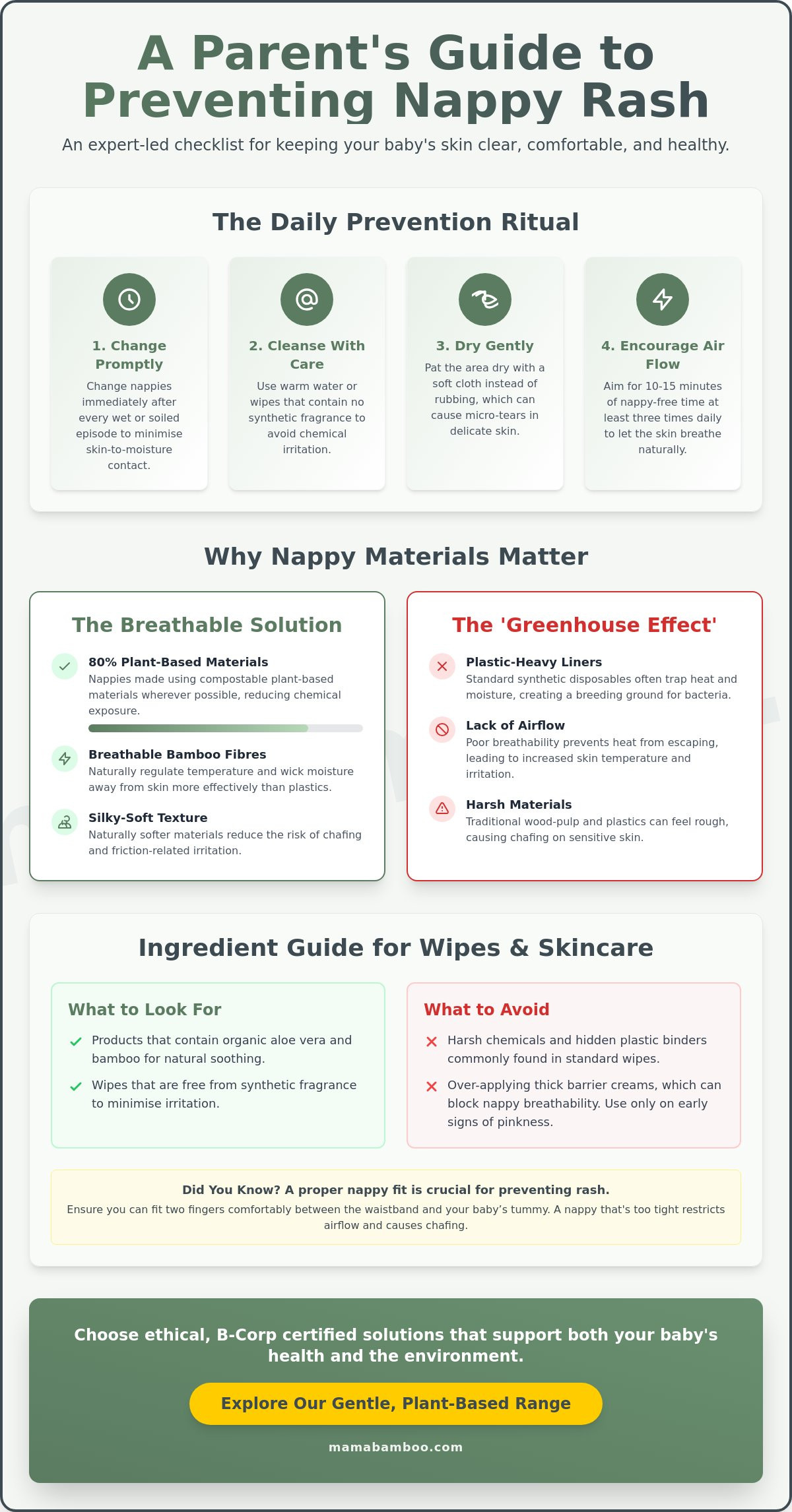
Change promptly: Change nappies immediately after every wet or soiled episode. Minimising skin-to-moisture contact is essential for maintaining skin integrity.
-
Cleanse with care: Use Baby Wipes that contain no synthetic fragrance. This avoids the irritation often caused by harsh chemical additives.
-
Dry with a gentle touch: Instead of rubbing, which can cause micro-tears in the skin, pat the area dry with a soft muslin cloth.
-
Encourage air flow: Aim for 10 to 15 minutes of nappy-free time at least three times daily to let the skin breathe naturally.
Mastering how to prevent nappy rash uk wide involves more than just the products you use; it's about the consistency of your care throughout the day. When you prioritise these small, frequent actions, you create a protective environment where your baby's skin can thrive.
Mastering the Nappy-Free Window
Fresh air is a powerful tool for skin health. To make this part of your day easier, place your baby on a washable mat or towel to manage any accidents whilst they enjoy the fresh air. It's often best to organise nappy-free time immediately after a bath, which is also an ideal opportunity to explore Baby Massage Courses for gentle bonding. This ensures the skin is completely dry before you put on a new nappy, reducing the risk of trapping moisture against the body.
When to Apply Barrier Protection
It isn't always necessary to apply cream at every change. In fact, over-applying thick pastes can sometimes interfere with the skin's natural defences. Only use barrier protection when you notice early signs of pinkness.
Choosing the Right Materials: Why Nappy Breathability Matters
Choosing the right materials is a fundamental step in understanding how to prevent nappy rash uk wide. Standard synthetic disposables often rely on plastic-heavy liners that trap heat and moisture against your baby's bottom. This lack of airflow creates a "greenhouse effect" where bacteria thrive. In contrast, nappies that are 80% plant-based offer a breathable alternative that supports the skin's natural health.
Understanding how to prevent nappy rash uk involves looking closely at what touches your baby's skin every hour of the day. Bamboo fibres are a cornerstone of this protective approach. They naturally regulate temperature and wick moisture away from delicate skin far more effectively than standard wood-pulp or plastic alternatives. By choosing nappies made using compostable plant-based materials wherever possible, you significantly reduce the likelihood of chemical exposure and friction-related irritation.
Mama Bamboo nappies are certified by Allergy UK as skin friendly.

Bamboo vs. Standard Disposables
Bamboo is naturally more absorbent and softer than the materials used in traditional disposables. It provides a silky texture that reduces the risk of chafing, which is a common trigger for skin breakdown. For a deeper dive into material performance, you can read the ultimate guide to bamboo nappies. Aligning your choice with Primary Care Dermatology Society guidelines ensures you are prioritising high-absorbency materials that keep the skin dry and healthy.
The Role of Absorbent Gels
Most modern nappies use Super Absorbent Polymers (SAP) to lock away liquid. High-quality versions of these gels are safer for the skin because they prevent moisture from leaking back onto the surface. Breathability in the nappy layers is what truly prevents the "greenhouse effect" by allowing heat to escape whilst keeping the wetness contained. If you're looking for a gentle solution, our Bamboo Nappies are designed with these specific skin-health needs in mind.
Don't forget the importance of a proper fit. A nappy that is too tight restricts airflow and causes chafing at the leg cuffs, which can quickly lead to redness. Ensure you can fit two fingers comfortably between the waistband and your baby's tummy to maintain optimal comfort and air circulation.
Ingredient Transparency: Navigating Wipes and Skincare
While choosing the right nappy is vital, the substances you apply to your baby's skin during a change are equally significant. Many parents searching for how to prevent nappy rash uk wide are surprised to find that common wipes contain hidden plastic binders or harsh chemicals. These additives can strip away the skin's natural protective oils, leaving it vulnerable to irritation and redness.
-
Avoid synthetic fragrance: These are primary triggers for contact dermatitis. Opting for products with natural, plant-derived scents is much kinder to sensitive areas.
-
Seek soothing ingredients: Look for skincare that specifies it contains organic aloe vera and bamboo. These ingredients provide a natural, calming effect without the need for complex chemicals.
-
Prioritise 100% compostable wipes: Choosing wipes made from plant fibres ensures they are free from the hidden plastic binders found in many standard brands.
-
Steer clear of alcohol: Harsh soaps and alcohol-based solutions can cause dryness and stinging, particularly if the skin is already slightly pink.
Understanding how to prevent nappy rash uk involves a commitment to reading every label with a critical eye. By removing irritants from your daily routine, you allow the skin's natural barrier to remain resilient and healthy.
Protecting your baby's skin barrier starts with the simplest, most honest ingredients. For a gentle and effective clean every time, try our Bamboo Baby Wipes.
Identifying Secondary Infections
Sometimes, despite your best efforts, a rash persists. It's important to differentiate between standard friction-based redness and a fungal infection like thrush. A standard rash usually stays within the nappy area, whereas thrush often appears as bright red spots that spread into skin folds. If you suspect your baby has more than just irritation, you can read our guide on nappy rash thrush to help identify and treat the symptoms correctly.
Embracing a Gentler Future for Your Baby
Navigating the early years of parenting is a journey of constant discovery. By focusing on superior material breathability, ingredient transparency, and a consistent hygiene ritual, you've already taken the most important steps in mastering how to prevent nappy rash uk wide. Your commitment to choosing products that contain organic aloe vera and bamboo, whilst avoiding synthetic fragrances, ensures your baby's skin remains as resilient as it is soft.
We believe that every change is an opportunity to protect both your little one and the world they'll inherit. Our nappies are crafted from 80% plant-based materials for superior breathability and are made using compostable plant-based materials wherever possible. As a B-Corp certified brand, we prioritise ethical excellence and provide fully recyclable or compostable packaging to support your family's mindful lifestyle.
You now have the tools and the knowledge to keep your baby comfortable and settled. Switch to 80% plant-based nappies today and protect your baby’s skin. Together, we can ensure a drier, happier tomorrow for your little one.
Subscription: The Stress-Free Way to Prevent Rash
Consistency is the secret to a happy, rash-free bottom. By choosing a subscription, you ensure that your home is always stocked with 80% plant-based nappies, preventing those late-night emergency trips to the supermarket where you might be forced to use harsher alternatives. Our flexible service can also include our baby shampoo and baby lotion, both of which contain organic aloe vera and bamboo for a soothing, natural finish to your nappy-change ritual.
Even our packaging reflects our values. It is fully recyclable or compostable, ensuring that no unnecessary waste is left behind. When you join the Mama Bamboo family, you aren't just buying essentials; you're adopting a mindful lifestyle that prioritises the well-being of your child and the planet. Take the first step towards a simpler, gentler routine by exploring our subscription options today.
Frequently Asked Questions
How long does it take for nappy rash to clear up?
Most cases of nappy rash will clear up within three days if you follow a consistent hygiene routine. It's essential to keep the area as dry as possible and maximise nappy-free time during this period. If you don't see an improvement after three days of careful management, it might be time to consider if there's an underlying cause, such as a fungal infection, that requires different care.
Can I use baby wipes if my baby has severe nappy rash?
You can use baby wipes on sore skin, provided they are specifically designed for sensitivity and contain no synthetic fragrance. Standard wipes often contain alcohol or plastic binders that can sting and worsen the irritation. Using our no-sting Bamboo Baby Wipes ensures a gentle touch.
What is the best way to clean a baby with nappy rash?
The best way to clean your baby is to use a gentle, plant-based wipe. Avoid using any products with harsh soaps that might strip the skin's natural oils. Once clean, always remember to pat the skin dry with a soft muslin rather than rubbing. This prevents further damage to the delicate skin barrier and keeps your baby comfortable.
Is it better to use cloth nappies or disposables to prevent rash?
High-absorbency disposables are often recommended for rash prevention because they are exceptionally efficient at wicking moisture away from the skin. Our 80% plant-based nappies provide superior breathability and are made using compostable plant-based materials wherever possible. This combination of high performance and material purity helps maintain a dry environment, which is the most effective way to protect sensitive skin from nappy rash challenges.
When should I see a GP about my baby’s nappy rash?
You should contact your GP if the rash is severe, appears to be bleeding, or hasn't improved after three days of home care. Additionally, seek medical advice if your baby develops a fever or if the rash spreads beyond the nappy area. These can be signs of a secondary infection or an allergy that requires specific treatment beyond a standard daily prevention routine.

Disclaimer
This article was created with the assistance of artificial intelligence and has been reviewed for accuracy; however, it is intended for informational purposes only.


