

Navigating the world of baby hygiene can feel overwhelming for new parents. You want to keep your little one perfectly clean and safe, but you're also met with a flood of conflicting advice about harsh chemicals, delicate skin, and environmental impact. The good news is that effective baby hygiene isn’t about clinical sterilisation; it’s about finding a gentle balance. It means protecting your baby’s developing skin barrier whilst using high-performance, plant-based materials that are kind to both them and the planet.
The Fundamentals of Newborn Hygiene: A Gentle Top-to-Toe Approach
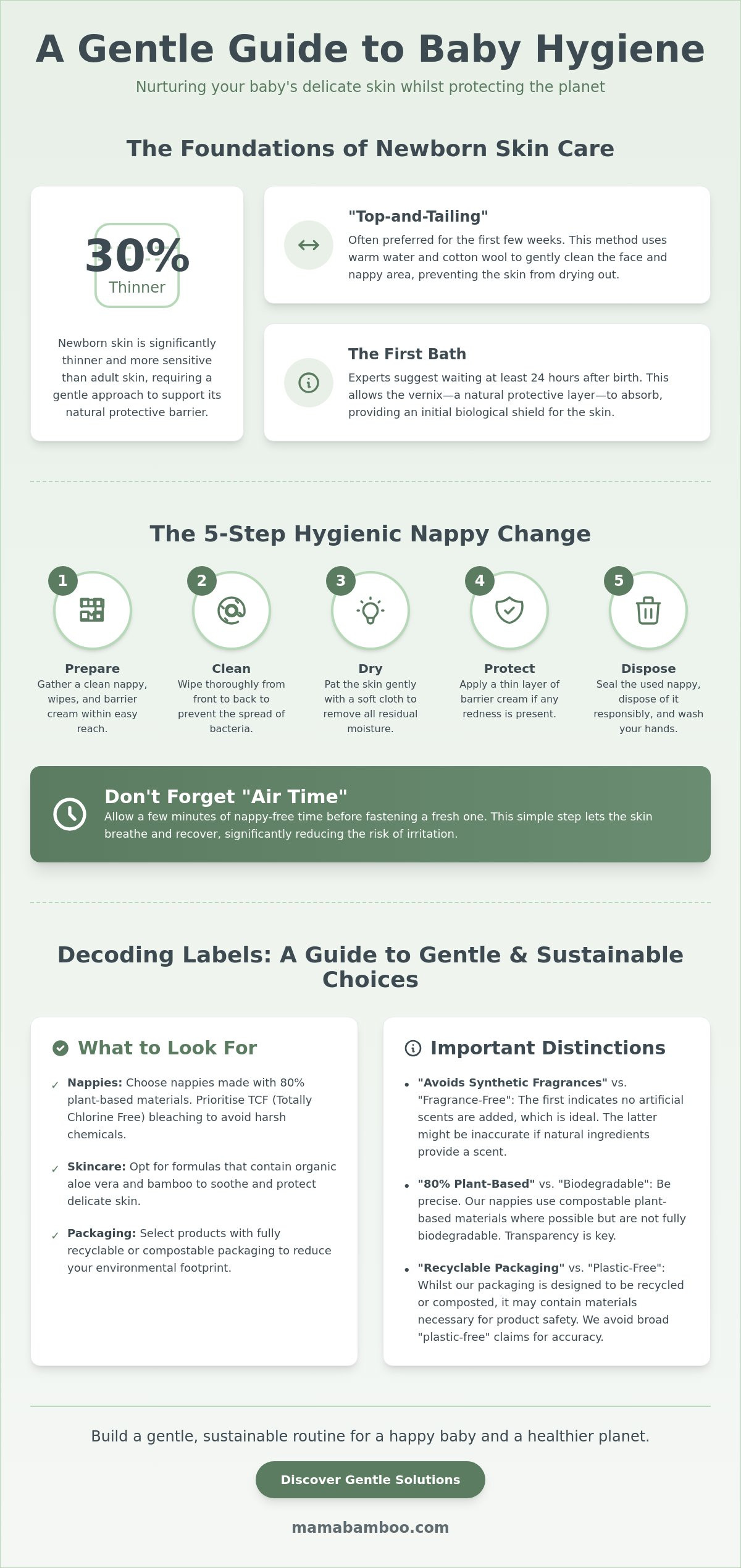
True baby hygiene is the practice of maintaining cleanliness whilst actively supporting the development of the skin’s natural protective barrier. A newborn’s skin is up to 30% thinner than an adult's, making it incredibly sensitive and porous. This is why a gentle, considered approach is far more beneficial than a rigorous one.
-
Understanding the Skin Microbiome: Your baby’s skin is home to a community of beneficial microorganisms known as the skin microbiome. This delicate ecosystem is their first line of defence against irritants and pathogens. Using harsh, antibacterial soaps and detergents can strip this barrier, leaving the skin vulnerable to dryness, eczema, and irritation.
-
"Top-and-Tailing" over Daily Baths: For the first few weeks, most newborns do not need a full bath every day. A daily "top-and-tail" wash is often preferred to prevent their delicate skin from drying out. This involves gently washing your baby’s face, neck, hands, and bottom with cotton wool and warm water.
-
The First Bath Tradition: Whilst a treasured milestone, experts and organisations like the NHS now recommend waiting at least 72 hours after birth for the first bath. This allows the vernix—the white, waxy substance on a newborn's skin—to be fully absorbed. Vernix is a natural moisturiser and provides a protective layer, so it’s best to let it do its job.
Targeted Cleaning: Eyes, Ears, and the Umbilical Cord
Some areas require specific, careful attention to ensure they remain clean and free from infection.
-
Eyes: To clean your baby’s eyes, first boil some water and allow it to cool completely. Moisten a piece of fresh cotton wool and gently wipe from the inner corner of the eye outwards. Use a new piece of cotton wool for each eye to prevent any cross-contamination.
-
Ears and Nose: Adopt a "hands-off" approach. Never use cotton buds or any other object inside your baby’s ear canal or nose, as this can cause serious damage. The ears and nose are self-cleaning; you only need to wipe away any visible wax or mucus from the outer areas.
-
Umbilical Cord: Current NHS advice focuses on keeping the umbilical cord stump clean and dry until it falls off naturally (usually within the first couple of weeks). Fold the top of the nappy down to expose the stump to the air, and clean it only if it becomes soiled, using cooled boiled water. Watch for any signs of infection, such as redness or discharge, and speak to your midwife or health visitor if you have any concerns.
Bathing Safety and Sensory Comfort
When it’s time for a proper bath, creating a safe and soothing environment is key. Ensure the room is warm and free from draughts. The ideal water temperature is between 36-37°C—use a bath thermometer to check it is comfortable but not too hot. When choosing a baby wash, look for gentle formulas that can soothe the skin. A wash containing natural ingredients like organic aloe vera and bamboo can help calm and moisturise during bath time, making it a comforting sensory experience.
Hygienic Nappy Changing: Protecting the Nappy Area Naturally
With newborns needing 10 nappy changes a day, establishing a hygienic routine is essential for preventing discomfort and nappy rash. A consistent, gentle process will protect your baby’s most sensitive skin.
Follow these five simple steps for a hygienic change:
-
Prepare: Have a clean mat, a fresh nappy, and wipes ready before you begin.
-
Clean: Always wipe from front to back, especially for girls, to prevent the spread of bacteria. Ensure you gently clean within all the skin folds.
-
Dry: Pat the area completely dry with a soft towel. Trapped moisture is a primary cause of skin irritation.
-
Protect: Allow for some "air time" whenever possible. Exposing the skin to the air is a crucial step that helps it breathe and recover. If using a barrier cream, apply a thin layer.
-
Dispose: Roll up the used nappy, secure it with the tabs, and dispose of it hygienically.
The materials your nappies are made from also play a significant role in hygiene. Nappies made from predominantly plant-based materials, like bamboo, are softer and more breathable, which can help reduce the risk of chemical sensitivity and nappy rash.
Choosing Wipes and Nappies for Sensitive Bums
Today’s parents have more choice than ever. Biodegradable bamboo baby wipes offer a significant advantage over standard plastic-based wipes; their textured surface and excellent moisture retention provide a more effective and thorough clean with fewer wipes. When choosing nappies, look for those made with TCF (Totally Chlorine Free) fluff pulp. This ensures the material that sits against your baby's skin 24/7 is free from unnecessary and harsh chemical exposure.
Managing Nappy Rash Through Better Hygiene
Nappy rash appears as red, sore, and blotchy skin in the nappy area. It's incredibly common but can usually be managed with an improved hygiene routine. If you notice signs of nappy rash, try increasing nappy-free time and ensuring the skin is perfectly dry after cleaning. Sometimes, a reaction to the materials in a particular brand of wipe or nappy is the culprit. Switching to a gentler alternative can often alleviate the symptoms. Highly absorbent nappies are superior for keeping moisture locked away from the skin, which is why many parents find that bamboo nappies help keep their baby’s bum comfortable and dry. For persistent issues, our guide on how to prevent nappy rash offers an in-depth checklist.
Sustainable Hygiene: Decoding Ingredients and Environmental Impact
Caring for your baby’s hygiene naturally extends to caring for their future world. Making sustainable choices doesn't mean compromising on performance; it means choosing products that are thoughtfully formulated and produced.
Here are five common ingredients to avoid in baby toiletries to protect sensitive skin:
-
Sulphates (SLS and SLES)
-
Parabens
-
Phthalates
-
Synthetic fragrances
-
Harsh alcohols
It’s also important to understand labelling. A product that avoids synthetic fragrances may still have a gentle scent from natural plant extracts, which is very different from being "fragrance-free." For brands committed to genuine ethical standards, look for third-party verification like B-Corp Certification. This shows a company has met the highest standards of social and environmental performance, transparency, and accountability. You can learn more about why this ethical certification matters in our detailed guide.
Reading the Label: Organic Aloe Vera and Bamboo
When you see ingredients like organic aloe vera and bamboo on a label, it signifies a focus on natural, soothing properties. Aloe vera is renowned for its anti-inflammatory benefits, whilst bamboo is naturally gentle. However, it's the purity and transparency of the entire formula that matters most. A few organic ingredients in a product filled with synthetics is not the same as a product designed from the ground up to be gentle and effective.
Frequently Asked Questions
How often should I bathe my newborn baby for good hygiene?
A full bath is only needed after the first few days and then just two or three times a week for a young baby. On other days, a "top-and-tail" wash—cleaning their face, neck, hands, and bottom with cotton wool and warm water—is sufficient to maintain good baby hygiene without drying out their delicate skin.
What is the most hygienic way to clean a baby’s face and eyes?
Use cooled, boiled water and separate, clean pieces of cotton wool for each eye. Gently wipe from the inner corner outwards. For the rest of the face, use a soft, damp cloth or a fresh piece of cotton wool, paying attention to the folds under the chin where milk can collect.
Are bamboo nappies more hygienic than standard plastic-based nappies?
Bamboo nappies contribute to better hygiene by being naturally more breathable and moisture-wicking. This helps to keep the skin drier and reduces the warm, damp environment where bacteria can thrive. They are also made without chlorine, lotions, and synthetic fragrances, reducing exposure to potential irritants.
Can I use tap water to clean my baby’s umbilical cord stump?
For a newborn, it is best to use cooled boiled water to ensure it is sterile. The primary goal is to keep the stump clean and dry to promote healing and prevent infection. Always follow the specific advice given to you by your midwife or health visitor, as they will provide the most up-to-date guidance.

Disclaimer
This article was created with the assistance of artificial intelligence and has been reviewed for accuracy; however, it is intended for informational purposes only.


